




Most of us probably first heard about Alishan thanks to the famous folk song, ‘Maidens of Alishan.’ But let me tell you, this place is so much more than a catchy tune! Located about 70 kilometers (roughly 43 miles) northeast of Chiayi County in Taiwan, Alishan isn’t just one mountain. Nope, it’s actually a sprawling collection of eighteen peaks, including Dawulian Mountain, Jianshan, Zhushan, and Tashan – the latter being the tallest at over 2,600 meters (that’s around 8,500 feet!). It’s practically neighbors with Yushan, Taiwan’s highest peak. The Alishan National Forest Recreation Area itself sits above 2,000 meters (about 6,500 feet), surrounded by towering mountains and blessed with perpetually cool, crisp air. They call its sunrise, sea of clouds, evening glow, lush forests, and high-mountain railway the ‘Five Wonders’ of Alishan. And trust me, they’re not exaggerating!
Deep within the Central Mountain Range, Alishan is home to the Bunun tribe, indigenous people who’ve called these rugged peaks home for centuries. This area boasts a truly pristine ecosystem, but it also faces its fair share of Mother Nature’s fury – think typhoons, landslides, and other wild weather. Yet, the Bunun people, with their incredible resilience and wisdom, have always battled these forces, carving out a life and leaving behind their powerful ‘Bunun voices’ echoing through the valleys. Seriously inspiring stuff.
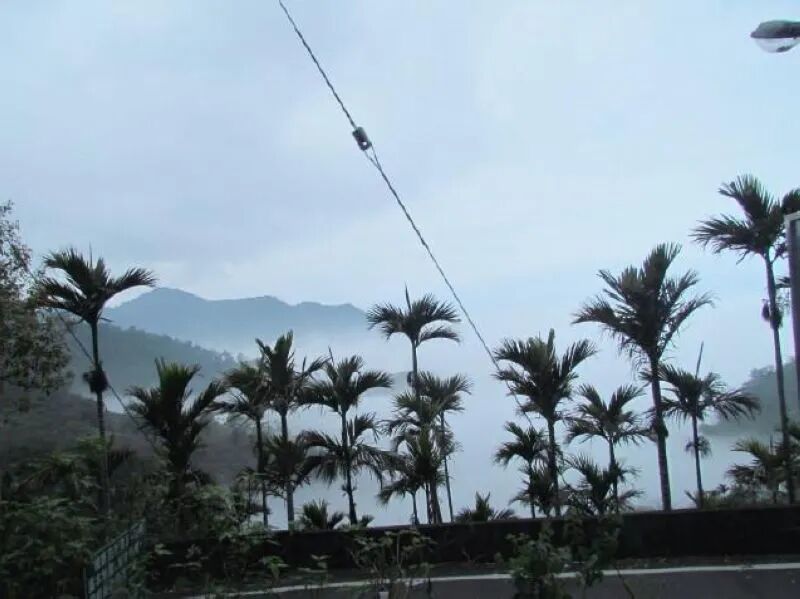
After a four-hour drive, we finally peeled off the highway and started our ascent on the winding mountain roads. Halfway up, the clouds began to roll in, thick and then thin, drifting lazily with the breeze. Looking out, the sea of clouds hugging the distant peaks was utterly breathtaking – seriously, it felt like something out of a dream, or like witnessing the famous cloudscapes of China’s Huangshan. My jaw was on the floor.
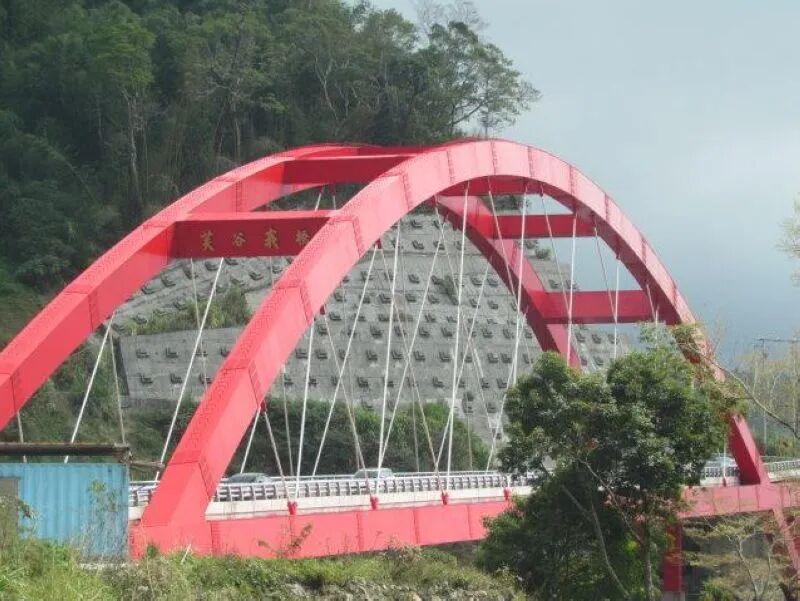
Around the 71-kilometer mark of the Alishan Highway, we spotted this absolutely stunning red arch bridge, just popping against the emerald green mountains. It’s the recently completed Fugu’e Bridge, which, in the Tsou language (another indigenous tribe here!), means ‘Mountain Hibiscus Flower’ blooming. How cool is that? This bridge spans 198 meters (about 650 feet) and stands 36 meters (around 118 feet) tall. It took two and a half years and over 280 million NTD (that’s roughly $9 million USD!) to build. Why so pricey? Well, this particular spot on the highway is geologically unstable and was hit hard by Typhoon Morakot (aka ’88 Typhoon’). Rebuilding the road was a nightmare, so engineers basically built this new bridge by sinking piles into more stable ground on either side, completely bypassing the landslide-prone areas. Now, it looks like a vibrant red dragon soaring through the mountains, a truly iconic new landmark for Alishan.
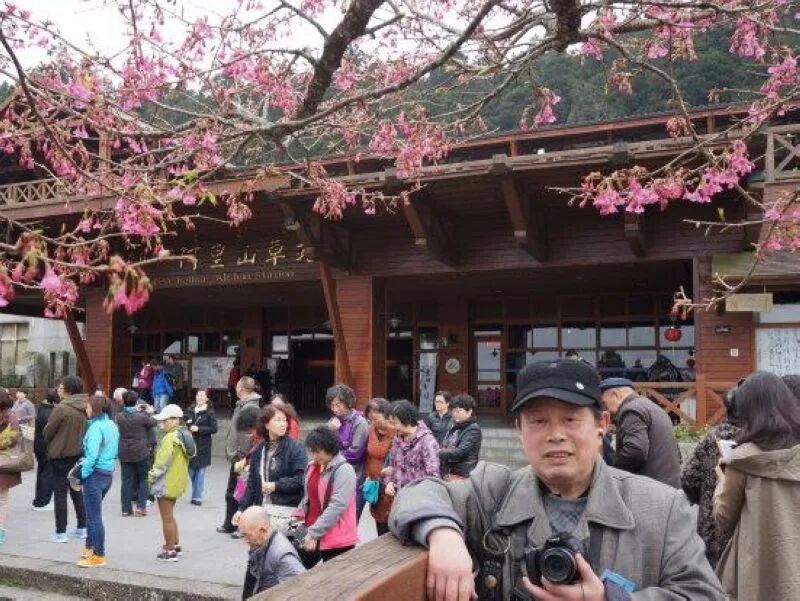
We rolled into the Forest Railway Station around noon. This gorgeous, newly built all-wood structure, costing over 100 million NTD (around $3.3 million USD!), is another fresh landmark for the Alishan Forest Recreation Area. If you’re here during holidays or flower season, they run shuttle trains between the New Alishan Station and Shenmu (Sacred Tree) or Zhaoping Stations. And guess what? The cherry blossoms were popping! Total bonus points.
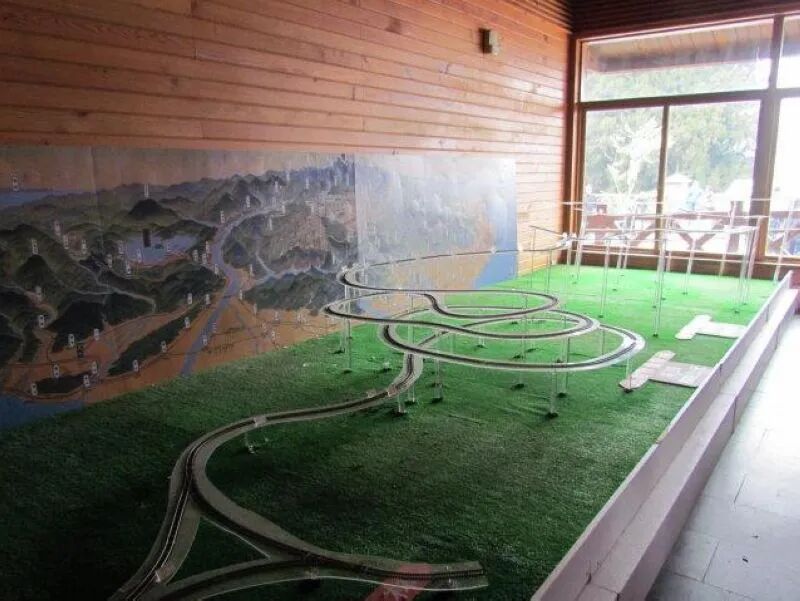
Next up, we checked out a model of the forest train route. This Alishan Forest Railway, running from Chiayi to Alishan, combined with four major scenic spots, forms the legendary ‘Five Wonders of Alishan.’ Get this: it was originally built in 1912 by the Japanese, primarily to haul away precious Hinoki cypress timber. But what they created was nothing short of a ‘miracle’ in railway history! Its ‘spiral railway loops’ and ‘umbrella-shaped gear-driven vertical cylinder locomotives’ were total game-changers, once even dubbed ‘crazy engineering.’ The railway is only 72 kilometers (about 45 miles) long, but it climbs from a mere 30 meters (around 100 feet) all the way up to 2,450 meters (over 8,000 feet!). Many sections gain 60 meters (almost 200 feet) per kilometer – that’s an insane gradient, practically unheard of anywhere else! Plus, the route often slices through dizzying canyons, requiring countless bridges. Someone actually counted: 72 kilometers of track, over 100 bridges (97 of them elevated!), and 56 tunnels! The train literally spirals up the mountain like a giant Slinky, with parts exposed on the hillside and others burrowed deep inside tunnels, sometimes circling a single peak multiple times. The scariest part, the steep incline at Independent Mountain, sees the train winding around, diving into tunnels, and even zig-zagging back and forth. They say when it crosses a bridge there, birds can actually fly *under* the train wheels. Wild, right?!
Yep, all wood!
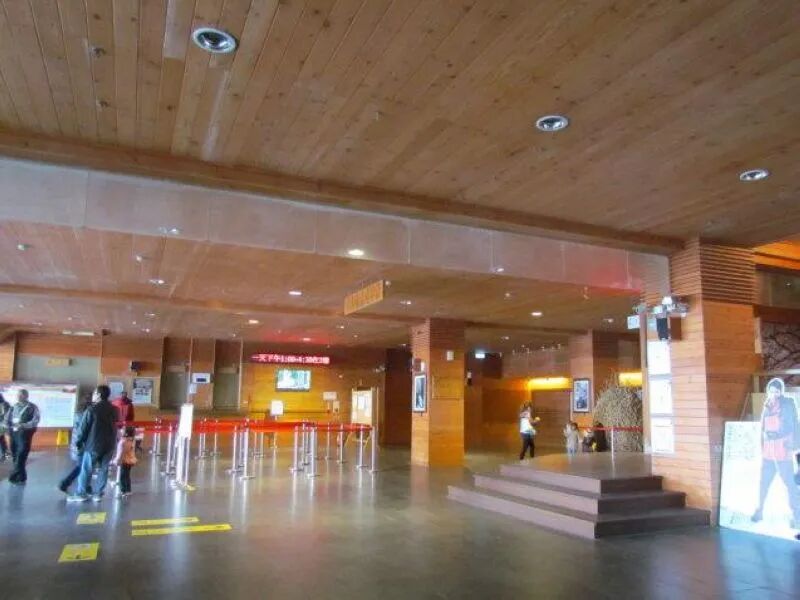
Now, a bit of a serious note: the Alishan train has had a couple of unfortunate derailments in 2003 and 2011, with dozens of lives lost. Since the 2011 accident, the main line has been closed to visitors, and the forest railway now only runs to three stations: Zhaoping Station, Shenmu (Sacred Tree) Station, and Zhushan Station. The first two have trains every half hour, with the last one around 4:00 PM. Zhushan Station, however, is a special case – there’s usually just one train around 6:00 AM (times might shift slightly with sunrise) to ferry people up to the Zhushan observation deck to catch that legendary sunrise! Then a return trip around 7:35 AM. Definitely something to plan for if you’re an early bird.

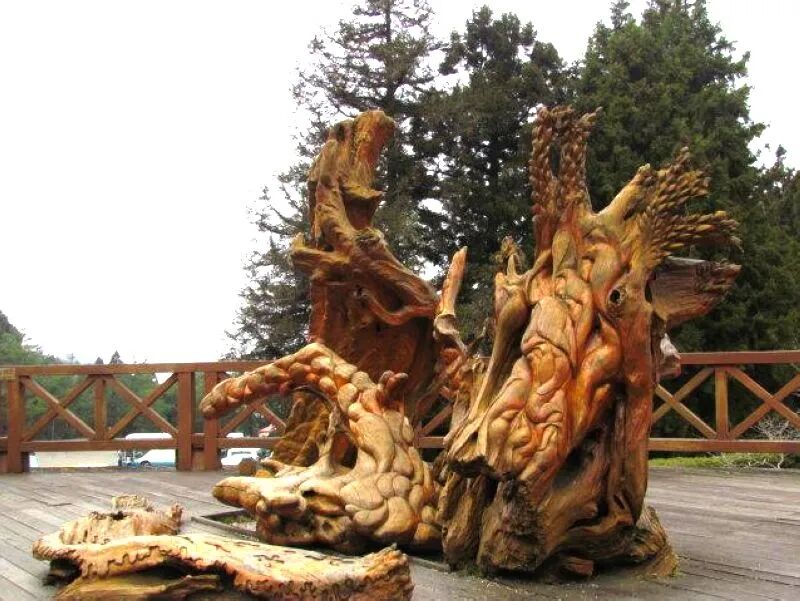
A massive, intricate Hinoki cypress root carving.
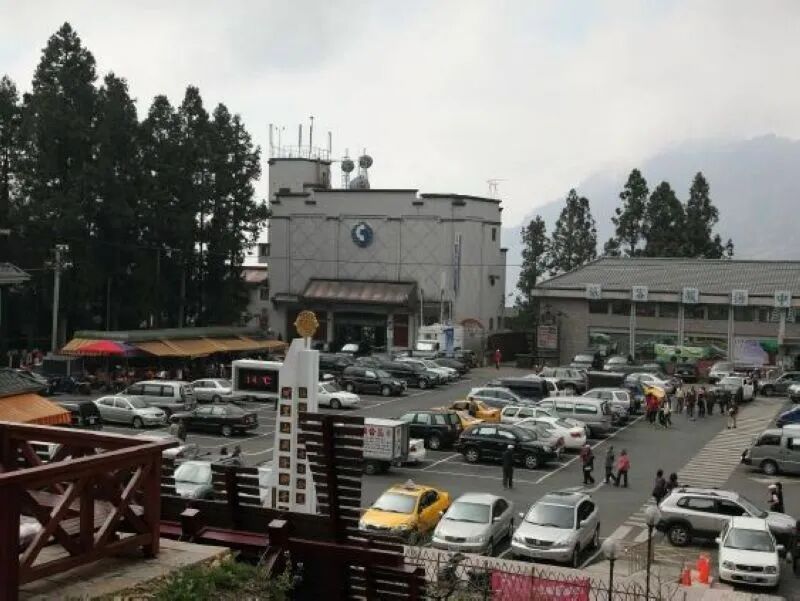
The parking lot – surprisingly orderly for such a popular spot!
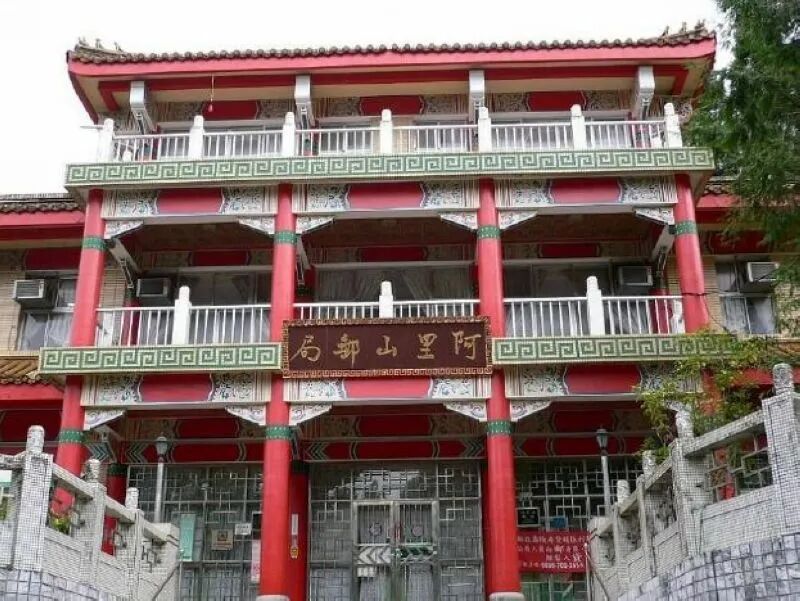
The Alishan Post Office. Always fun to send a postcard from a cool place!
The bus station.
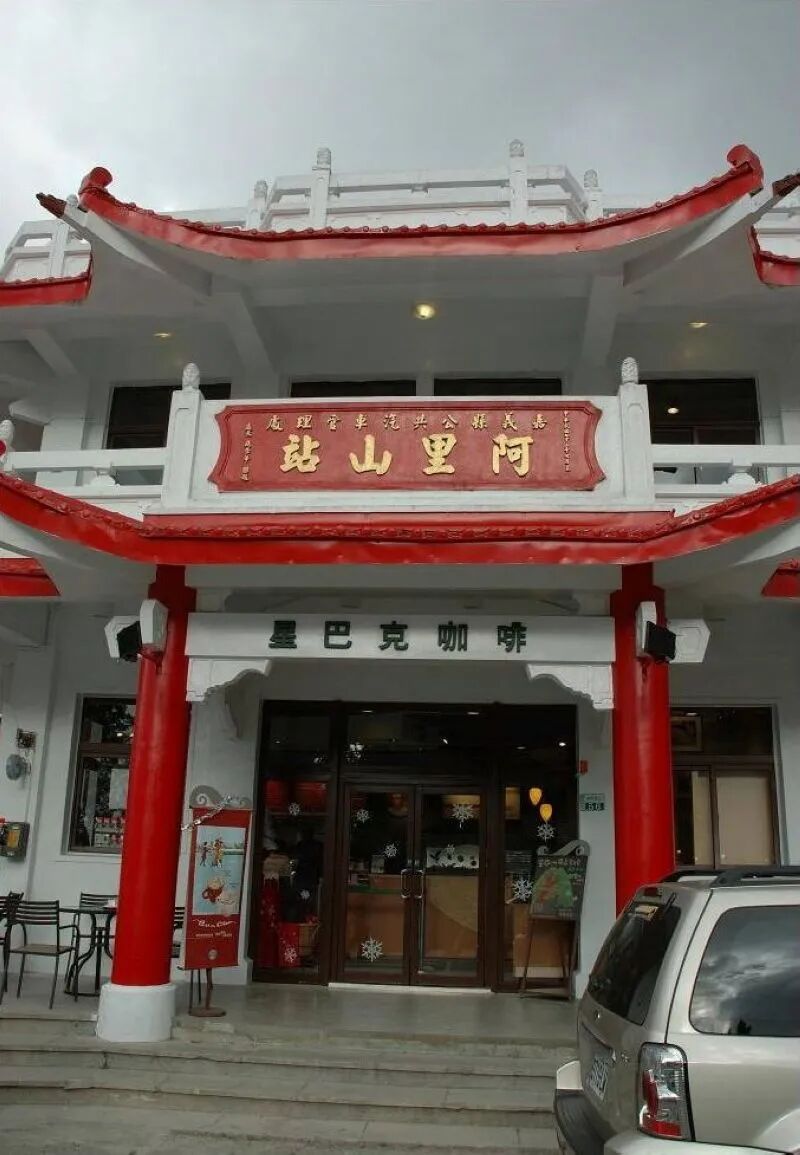
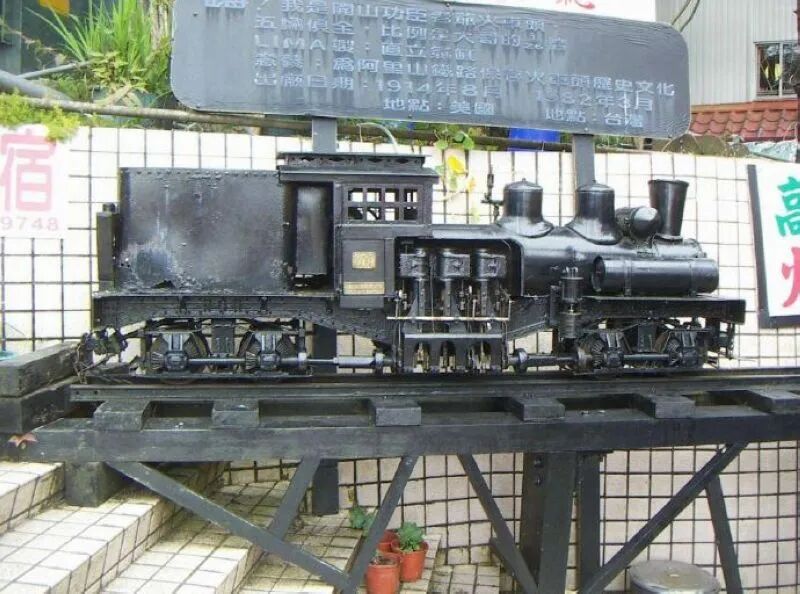
An adorable model of a vintage locomotive.
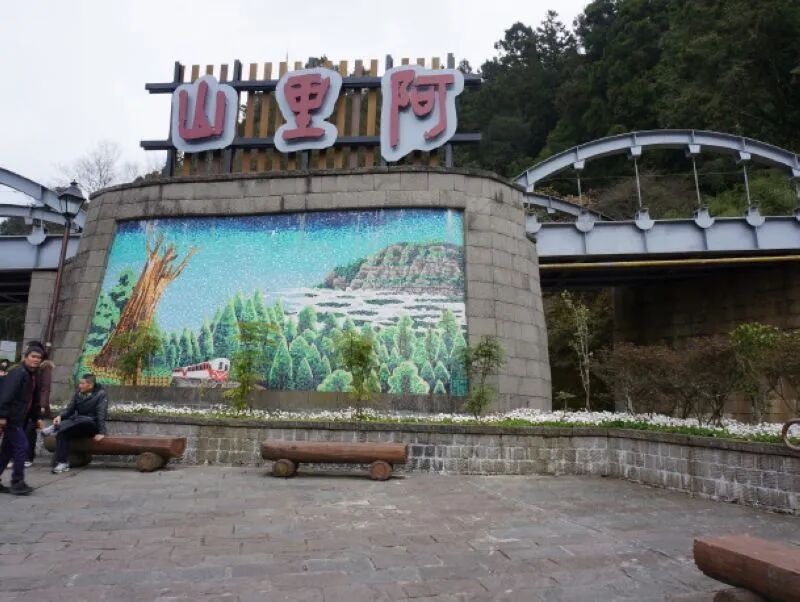
Our first stop entering the Alishan Forest Recreation Area was the initial checkpoint. The plaza walls here are adorned with these fantastic tile mosaics, depicting Alishan’s iconic features – a really artsy way to welcome you and hint at what’s to come!
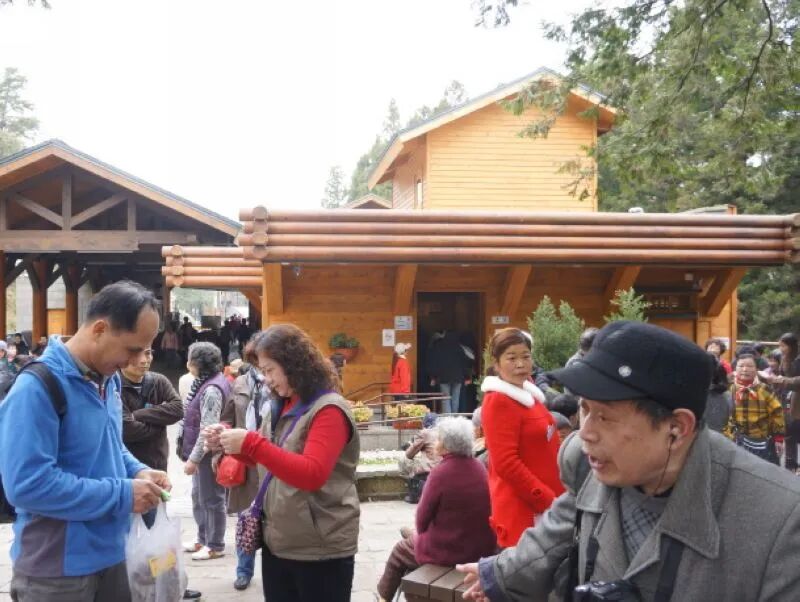
Even the visitor entrance and restrooms were all made of wood – keeping with the forest vibe!
Spacious wooden boardwalks, perfect for strolling.
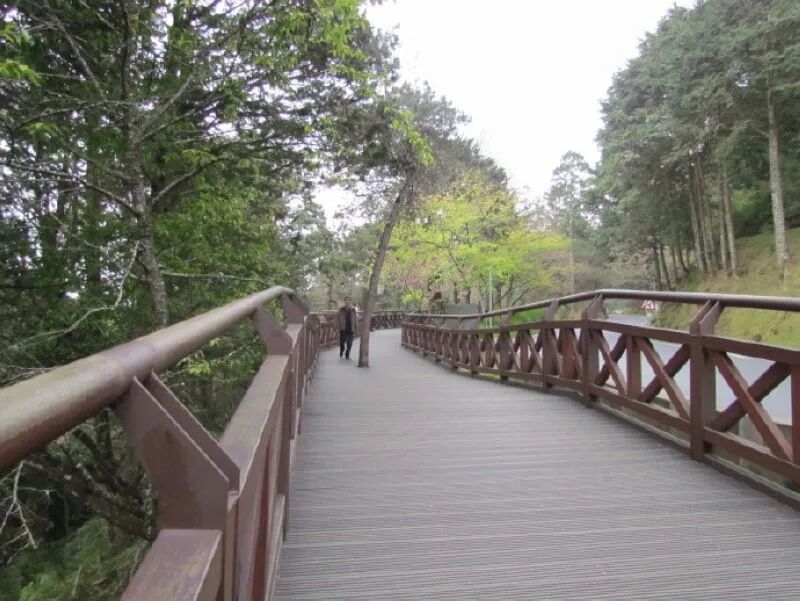
Trains, cars, and pedestrians all have their own lanes here – surprisingly well-organized chaos!
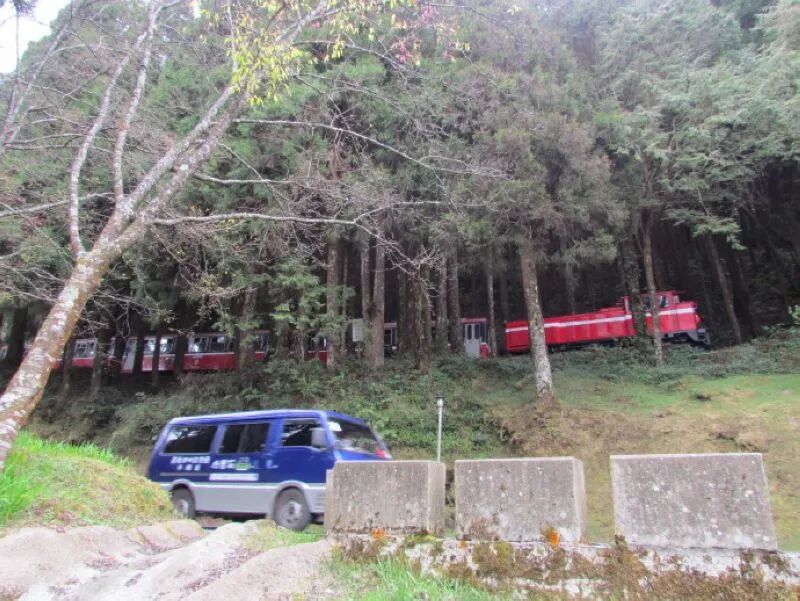
We passed by Alishan House, apparently one of the most popular spots for flower viewing and *the* place to catch Alishan’s stunning sunsets and evening glow. Major bummer for us, being on a tour, we totally missed out on witnessing that magic! Next time, I’m booking my own trip, just for the alpenglow.
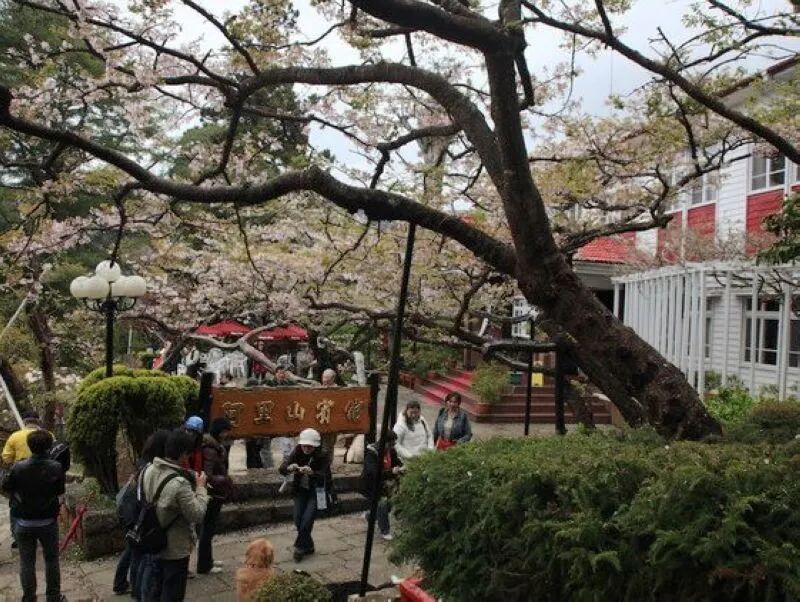
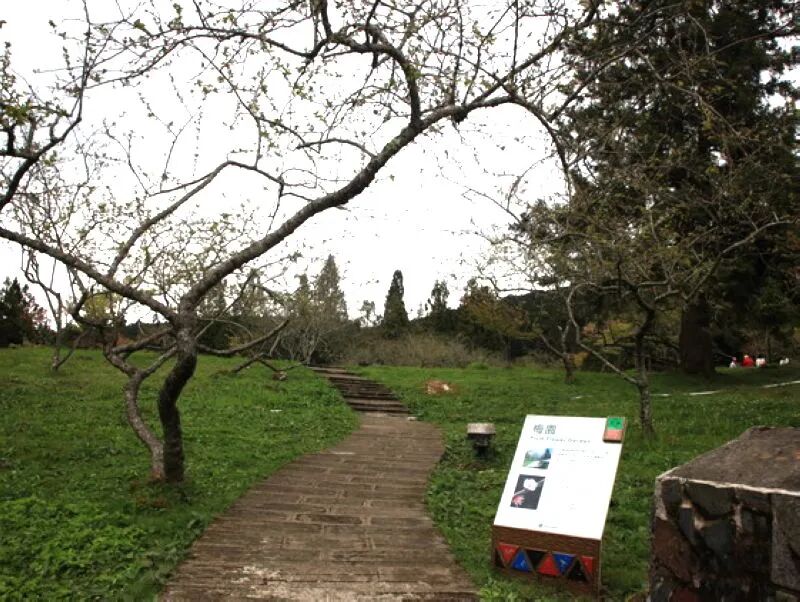
The Alishan Plum Garden is another hotspot, especially between February and March, when pink plum blossoms mingle with all sorts of red and white cherry blossoms (like Taiwan’s native Formosan cherry, Yoshino, Chishima, Oshima, and Takasago cherries, plus flowering crabapples!). Sadly, no plum blossoms for us this trip, but the cherry blossoms were still putting on a show.
At the Alishan Police Station, if you time it just right, you can apparently snap a picture of the little Alishan train chugging by with a backdrop of blooming cherry blossoms. We didn’t have the luxury of waiting around for the perfect shot, but hey, maybe you will!
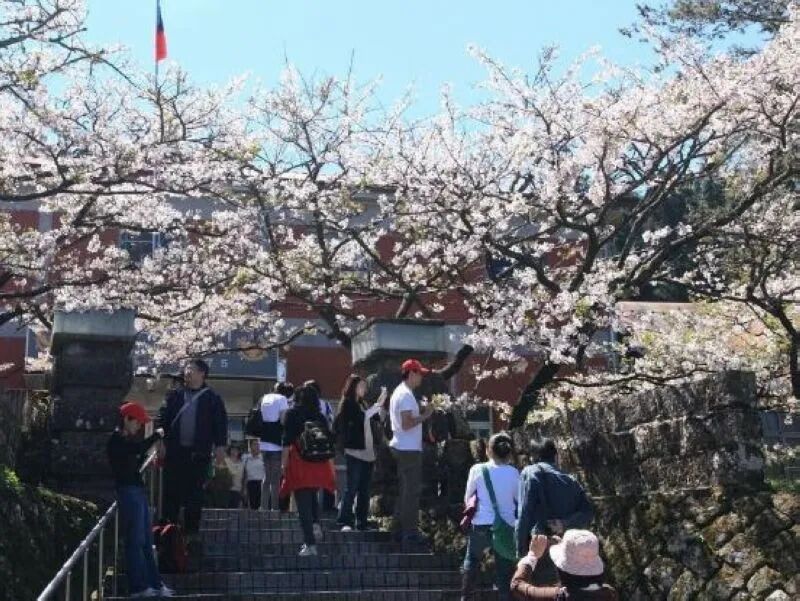
Zhaoping Park, another gem in Alishan, is where you can feast your eyes on Yoshino and Oshima cherries, Taiwan’s Formosan cherries, magnolias, Rhododendron morii, and flowering quinces. Talk about a floral paradise!
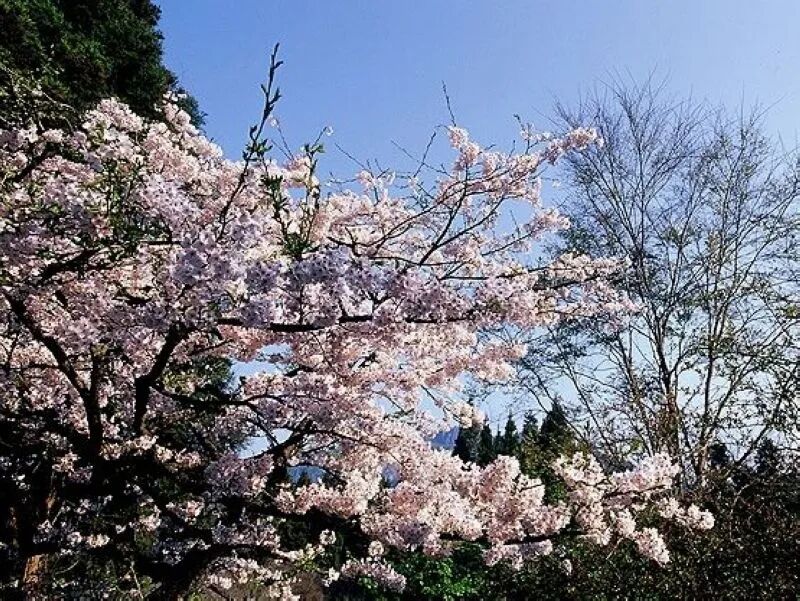
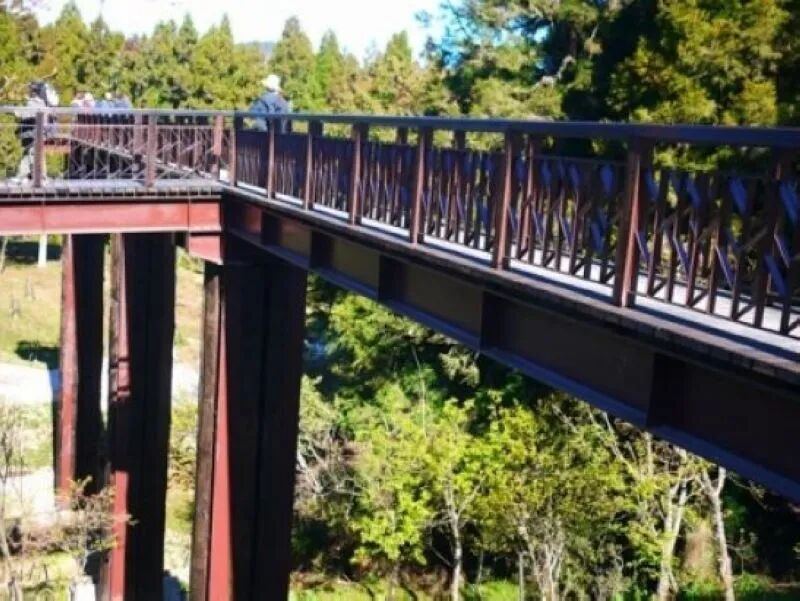
Then there’s the Alishan Skywalk, Taiwan’s highest-altitude scenic walkway! It’s got a steel frame wrapped in wood, and at its deepest point, it’s about 30 meters (almost 100 feet) above the ground. Definitely not for those with a fear of heights, but the views are epic!
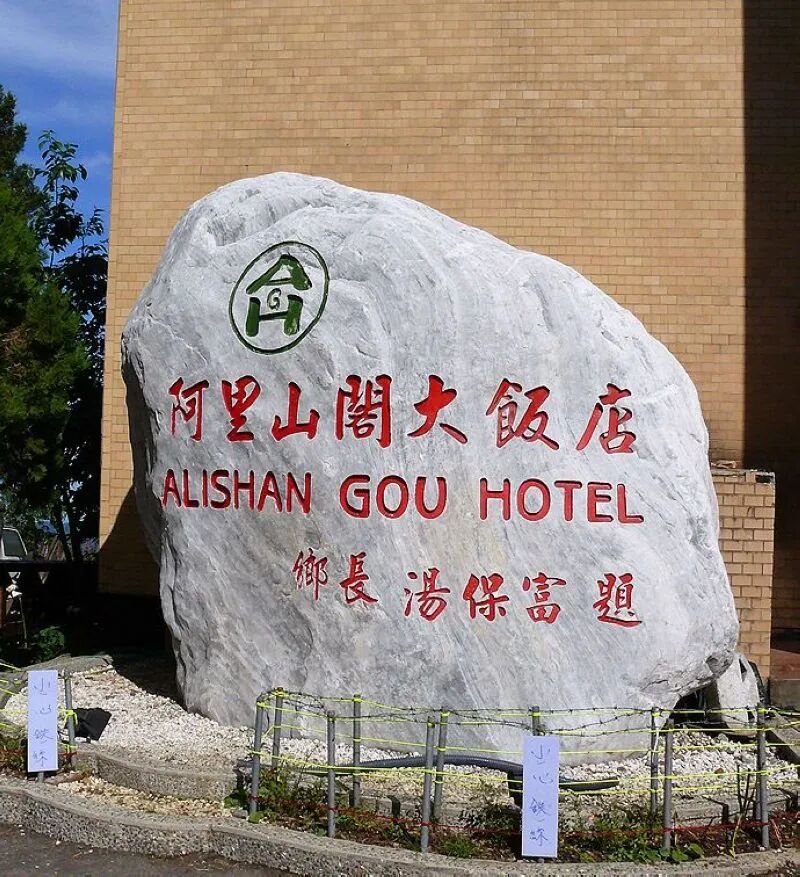
The swanky Alishan Pavilion Hotel. And get this – the sign was inscribed by the township mayor! Who knew?
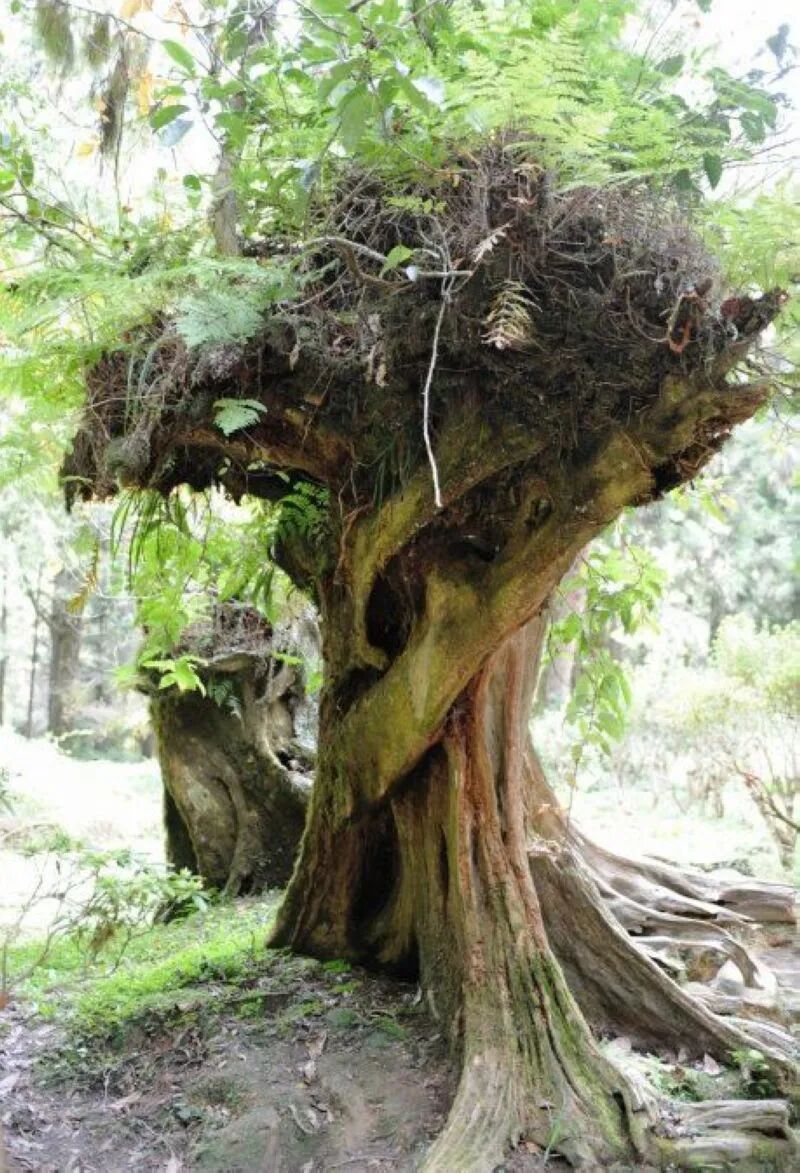
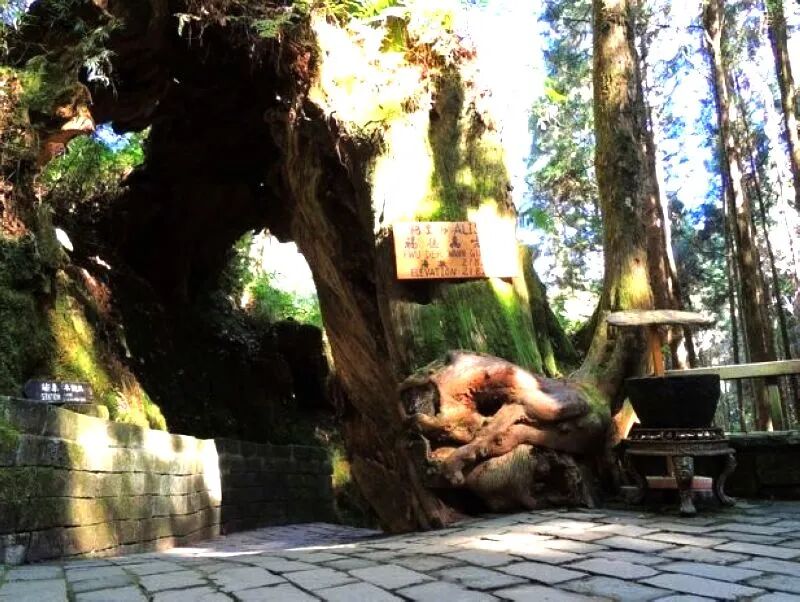
After that, we hit the forest trails, heading towards the Sister Ponds. Along the way, we saw some truly magical trees, each one with such unique, vivid shapes. Mother Nature’s a sculptor, folks!
The ‘Four Sisters’ tree formation.
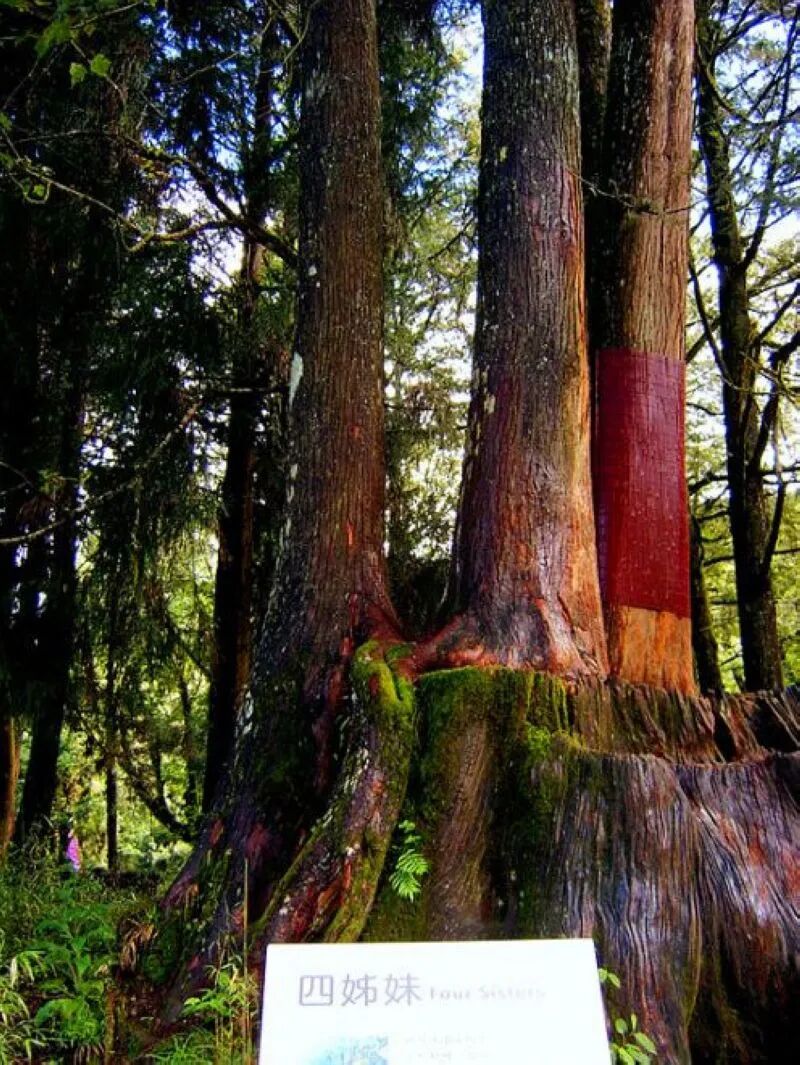
A ‘Hearts Entwined’ tree – perfect for a romantic selfie!
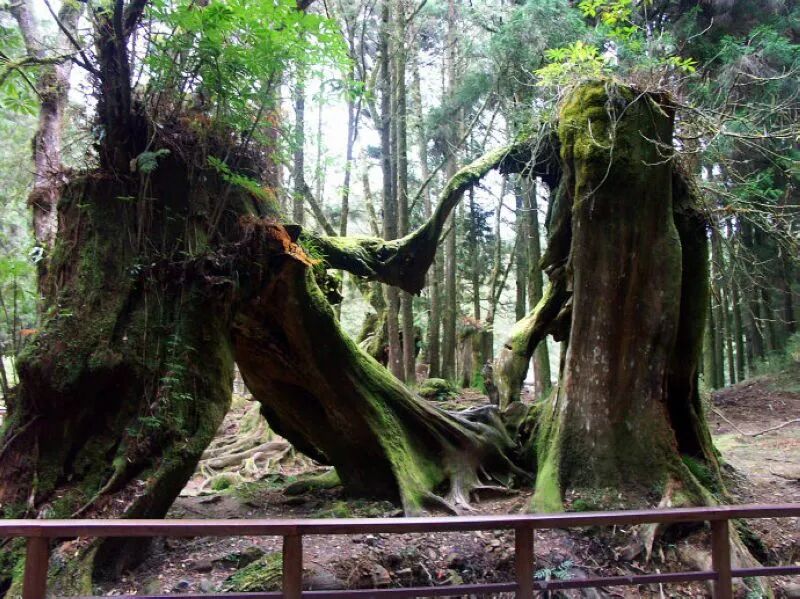
The ‘Dragon and Phoenix Match’ – pretty cool, right?
The ‘Three Brothers’ – standing tall together.
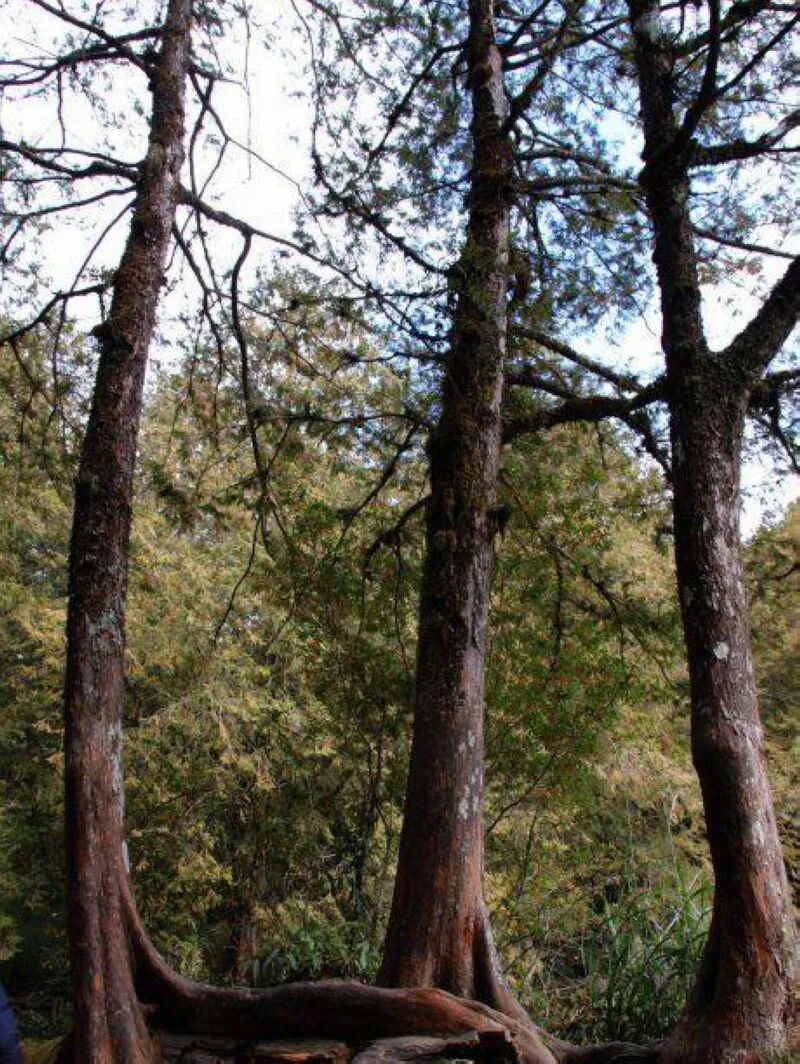
The ‘Source of Life’ tree, looking ancient and wise.
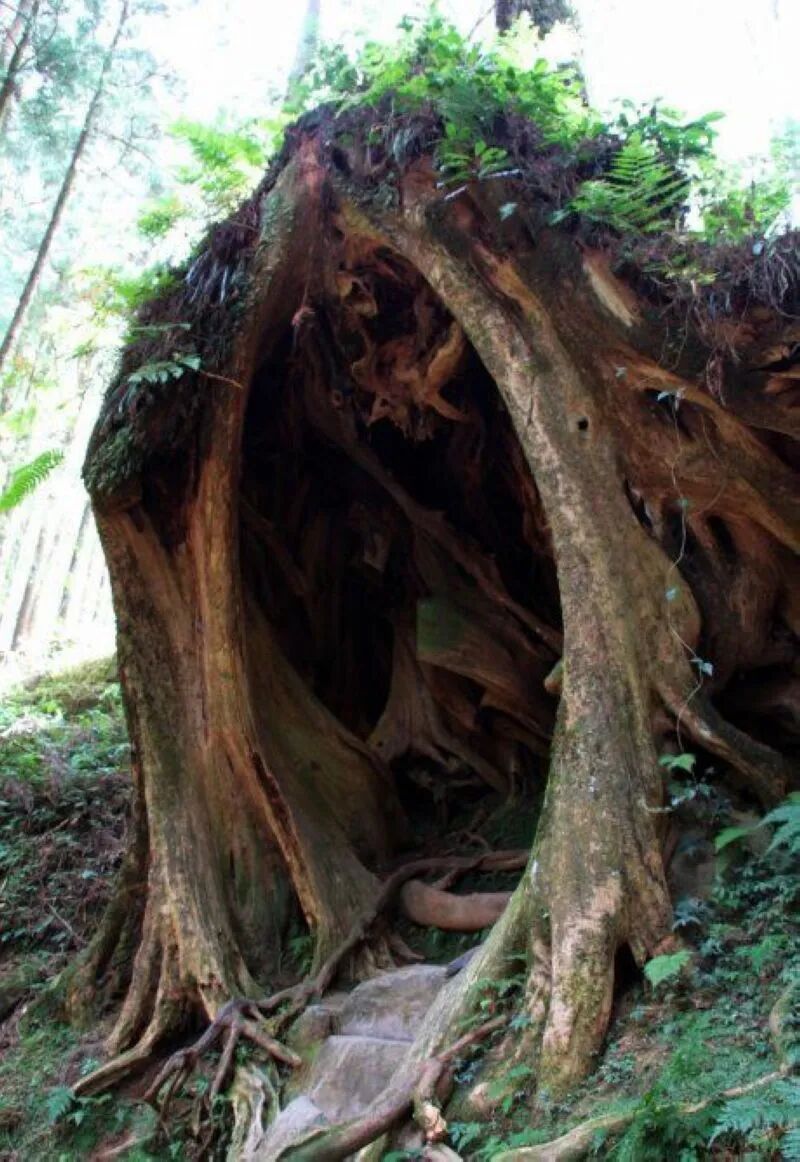
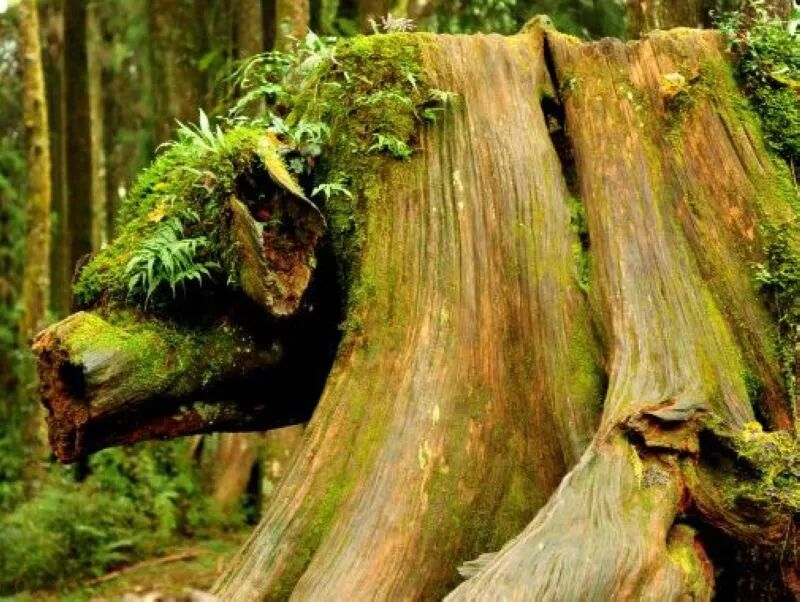
And finally, the ‘Golden Pig Brings Good Fortune’ tree. You gotta love how they name these!
Just a short hike away were the famed Sister Ponds – two neighboring lakes of different sizes. The ‘Elder Sister Pond’ is rectangular, covering about 160 ping (around 5,700 sq ft), while the ‘Younger Sister Pond’ is more circular, at 20 ping (about 700 sq ft). Legend has it that two indigenous girls tragically ended their lives here together, giving the ponds their poignant name. They really do look like two bright eyes nestled into Alishan’s landscape. The water never dries up, and the misty mountains reflecting in their depths create a truly ethereal, dreamlike scene – straight out of a painting.
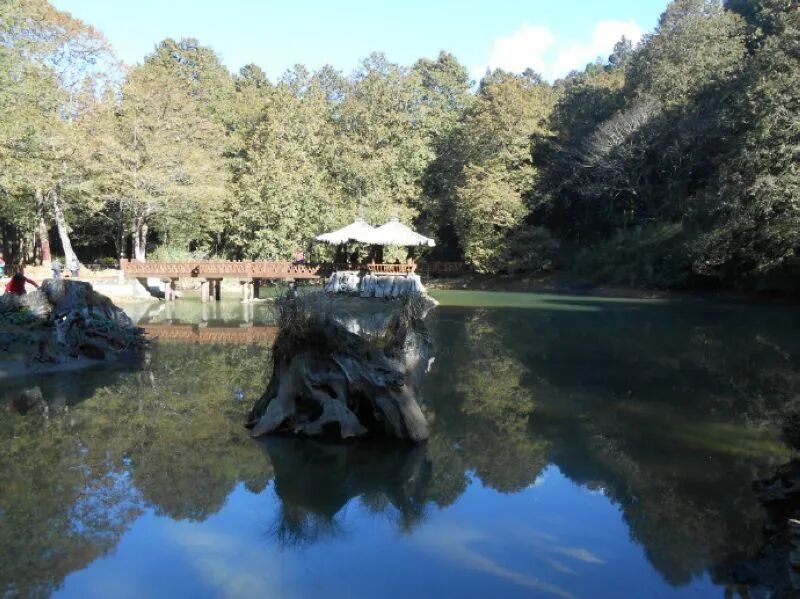
The Younger Sister Pond, with its shallow, clear, circular waters, felt incredibly serene. A small pavilion and a charming little bridge dotted the scene, with unknown plants beautifully mirrored on the surface, making it look like a pristine watercolor painting.
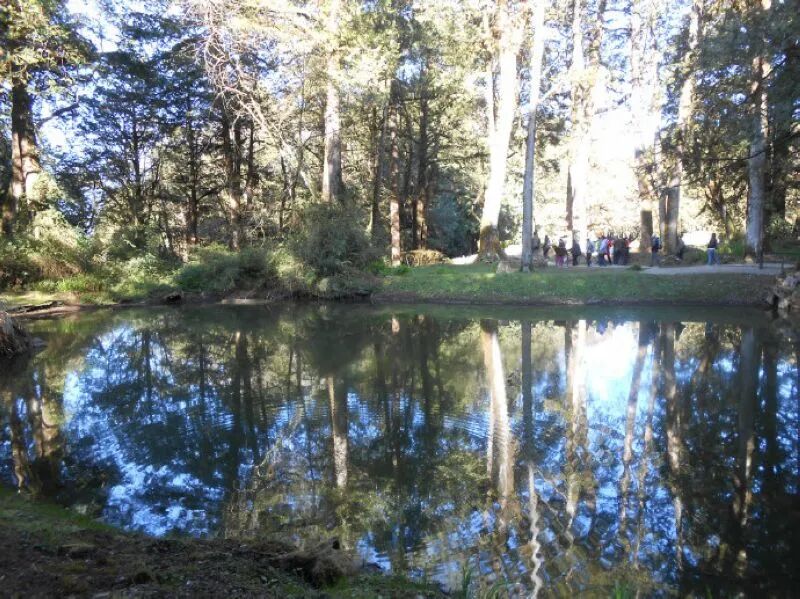
The Elder Sister Pond, on the other hand, was long and rectangular, its deep green waters reflecting the sky like a perfectly smooth mirror. Absolutely stunning!
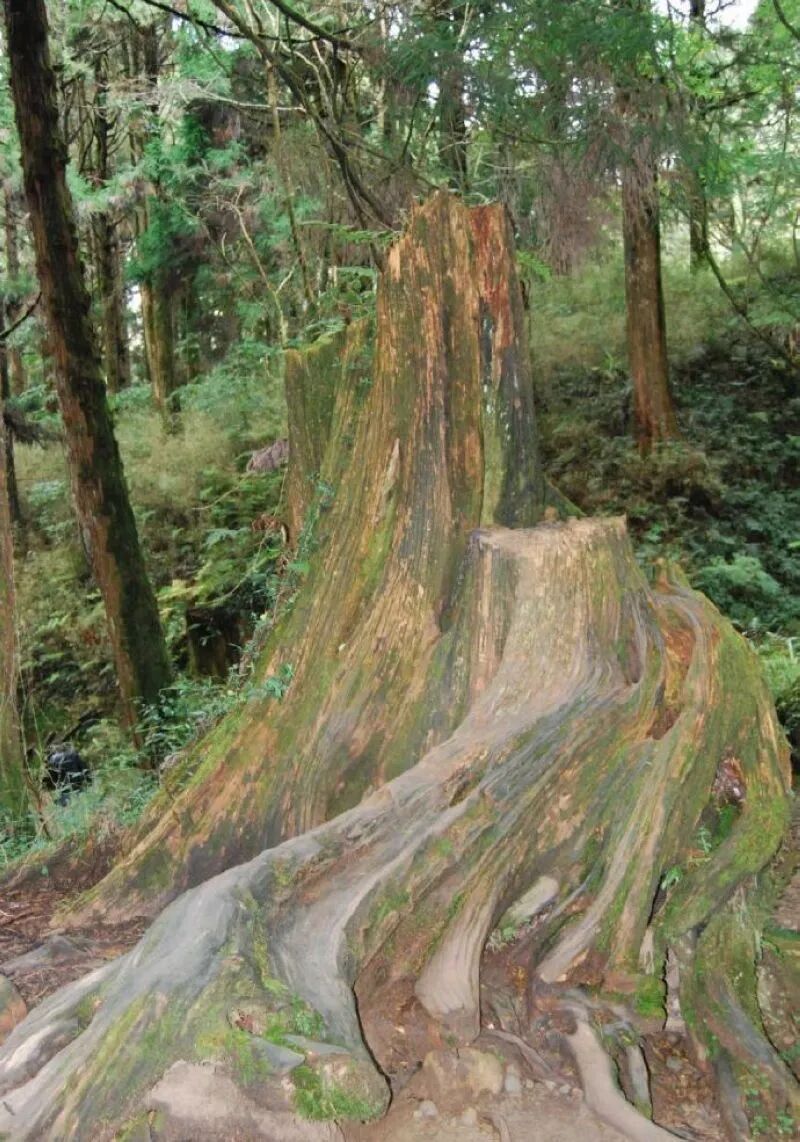
Now, let’s talk about the Hinoki cypress – Taiwan’s most ancient ecosystem, considered a global treasure right up there with ginkgo and metasequoia trees. These Red Hinoki cypresses have a light reddish hue, a fine, dense grain, and are naturally oily, giving off a subtle, non-pungent fragrance. They’re super resistant to decay! They thrive in the mountains between 1,700 to 3,000 meters (about 5,500 to 9,800 feet) in elevation and are unique to Taiwan, revered as ‘sacred trees.’ Sadly, during the Japanese occupation, over 30,000 of these magnificent trees were mercilessly cut down and shipped off to Japan. Today, only a handful of these ancient giants remain, standing as silent, majestic witnesses to a tragic, almost forgotten history.
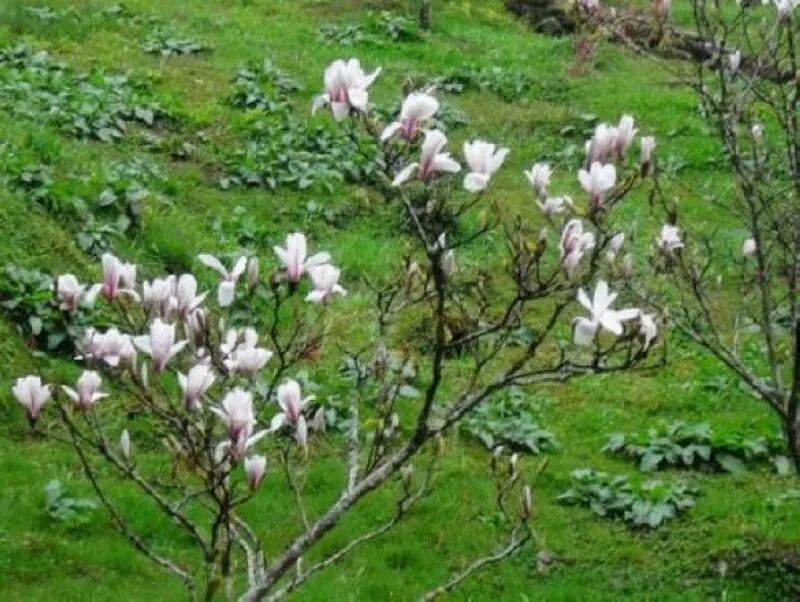
The Alishan Magnolia Garden, as the name suggests, is brimming with magnolias, though we did spot a few cherry trees interspersed among them, adding little pops of pink.
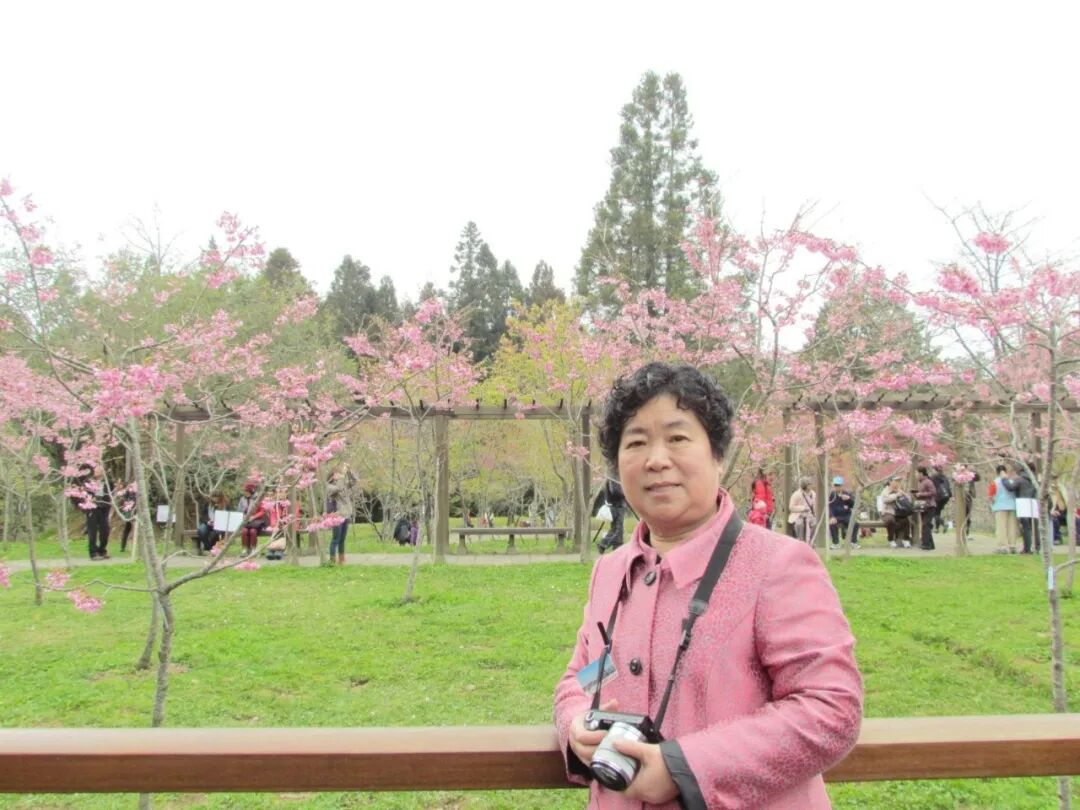
Yep, what we call magnolias, they often refer to as ‘Mulan’ here in Taiwan.
Phew, what an adventure so far! And guess what? This is just Part 1. Stay tuned for more Alishan magic!

More Stories
This Tainan Hidden Gem is Serving Up the Lard Rice of Your Dreams
70 Years of Perfection: The Legendary Soy Sauce Chicken Hidden in a Tainan Alleyway
The Best Croissants in Tainan? Why Deer House Bakery is Worth the Hype