Alright, fellow travelers, get ready for another installment of my epic Taiwan adventure! Today, we’re zeroing in on a true Taipei icon: the National Dr. Sun Yat-sen Memorial Hall. Picture this: it’s nestled right in the bustling Xinyi District, at 505 Ren’ai Road, Section 4 – basically smack dab between some of Taipei’s major arteries like Zhongxiao East Road and Guangfu South Road. This grand dame was built to commemorate the 100th birthday of Dr. Sun Yat-sen, the founding father of the Republic of China. Pretty cool, right?
Just check out this view of the Memorial Hall, peeking down from the Taipei 101 observatory. What a stunner!
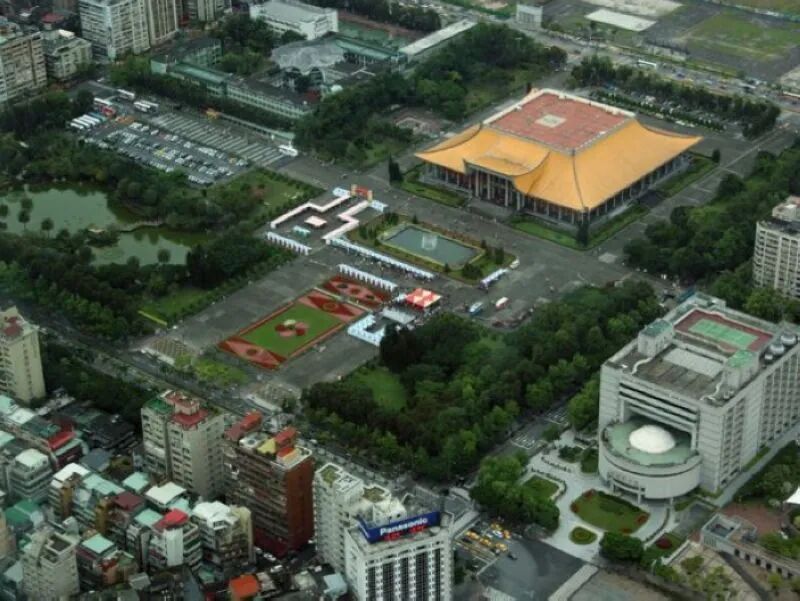
And here’s a birds-eye view for good measure, just to give you the lay of the land.
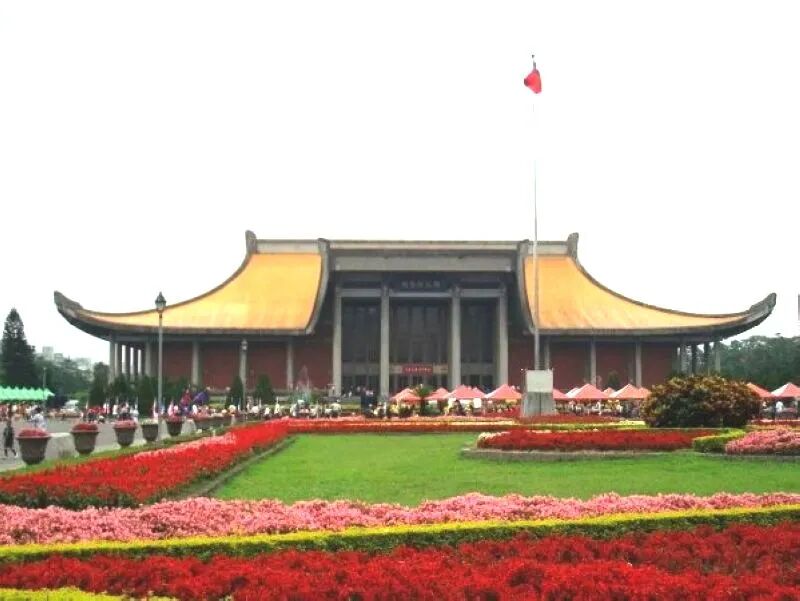
First impressions? This place is HUGE and absolutely majestic! The roof, a sight to behold, resembles a classic Chinese ‘Xieshan’ style, with eaves that gracefully sweep upwards, almost like a giant bird ready for takeoff. The Hall stands tall at 30.4 meters (that’s about 100 feet for us folks!) and stretches 100 meters (roughly 330 feet) on each side. It’s supported by 14 massive gray columns per side, all holding up that vibrant yellow, upturned roof. It sits so serenely in the middle of a sprawling 100,000-square-meter plaza, surrounded by trees, flowers, and open space. The contrast between the imposing structure and its natural surroundings is just captivating. It truly gives off this vibe of immense strength and beauty, simple yet exquisitely detailed – definitely a head-turner!
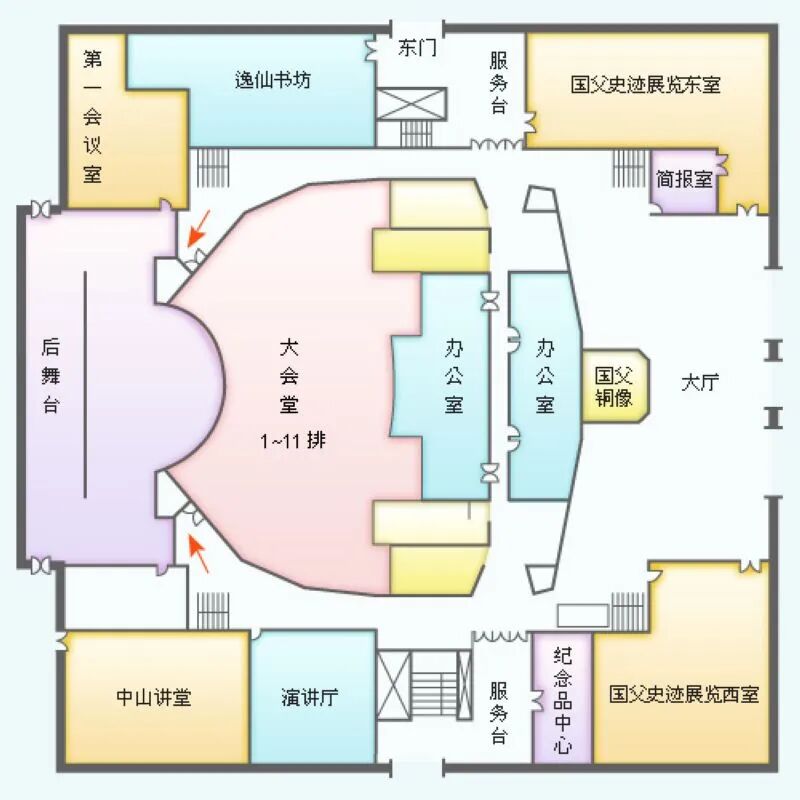
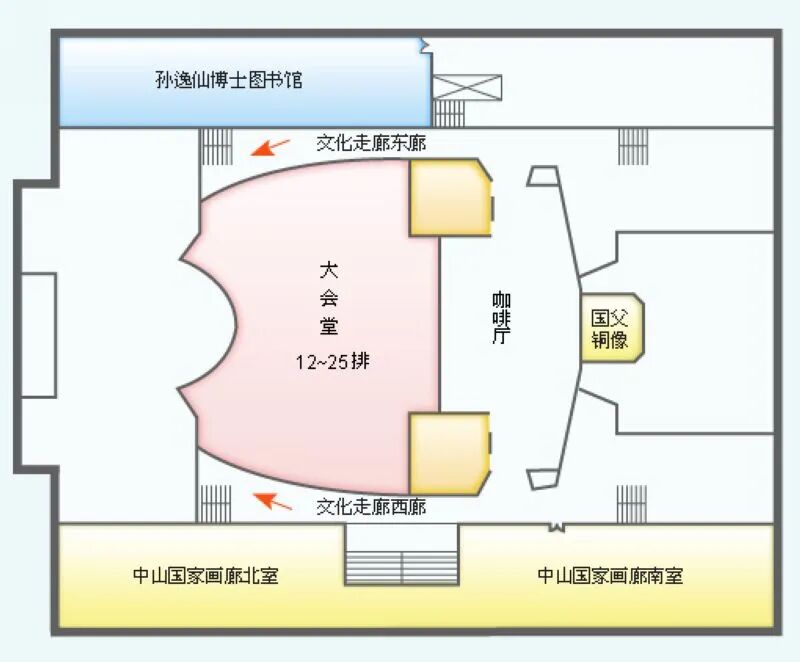
Stepping inside, you’re greeted by this grand, well-lit space. Here’s a quick peek at the first-floor layout.
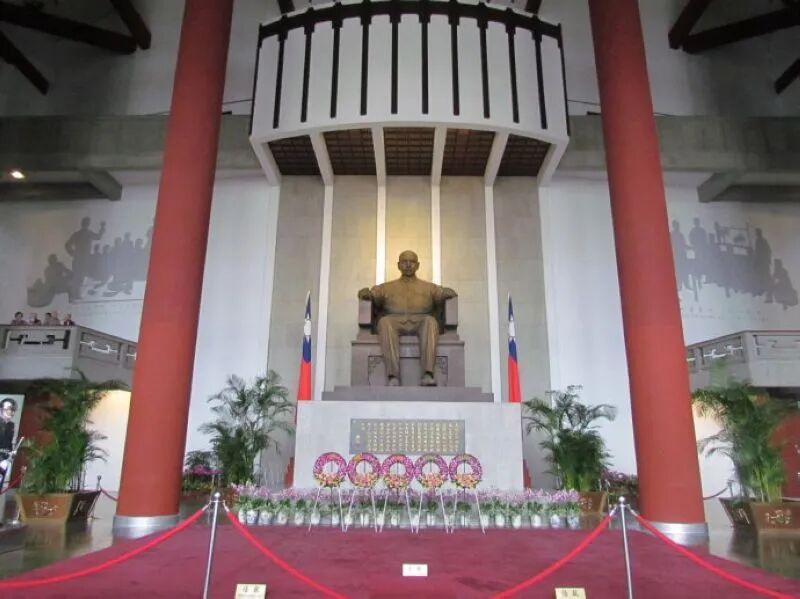
Right in the main hall, facing you, is a colossal bronze statue of Dr. Sun Yat-sen. This guy is 5.8 meters (about 19 feet) tall and weighs a whopping 17 tons! Dr. Sun is depicted sitting calmly in a comfy-looking armchair – a true picture of statesmanship.
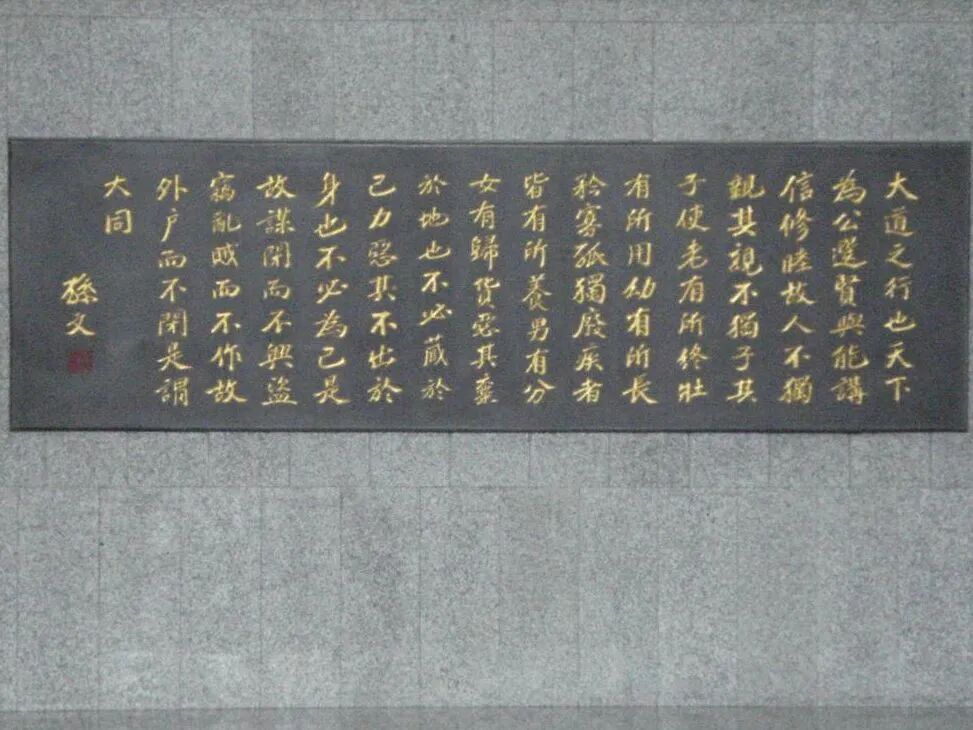
Below the statue, etched in gold on a stone plaque, is an excerpt from “The Great Commonwealth” (Datong) by Confucius, as recorded in the Book of Rites. This is a passage Dr. Sun Yat-sen himself transcribed: “When the Great Way is practiced, the world is shared by all. The worthy and able are chosen, and sincerity and harmony are cultivated. Thus, people do not only love their own parents, nor do they only cherish their own children. The aged are able to find their end, the able-bodied are employed, the young are given growth, and the widowed, orphaned, lonely, disabled, and sick are all cared for. Men have their duties, and women have their homes. Goods are disliked when they are discarded, but not necessarily kept for oneself; labor is disliked when it is not exerted, but not necessarily for oneself. Therefore, schemes do not rise, and theft, banditry, and rebellion do not occur. Hence, outer doors are not shut; this is called the Great Commonwealth.” Deep stuff, right?
Flanking the statue are two guards, armed and absolutely motionless. I swear, for a hot minute, I thought these guys were mannequins! Seriously, I watched them for *minutes* – not a blink, not a twitch, not a single bead of sweat on their brows. Talk about discipline!
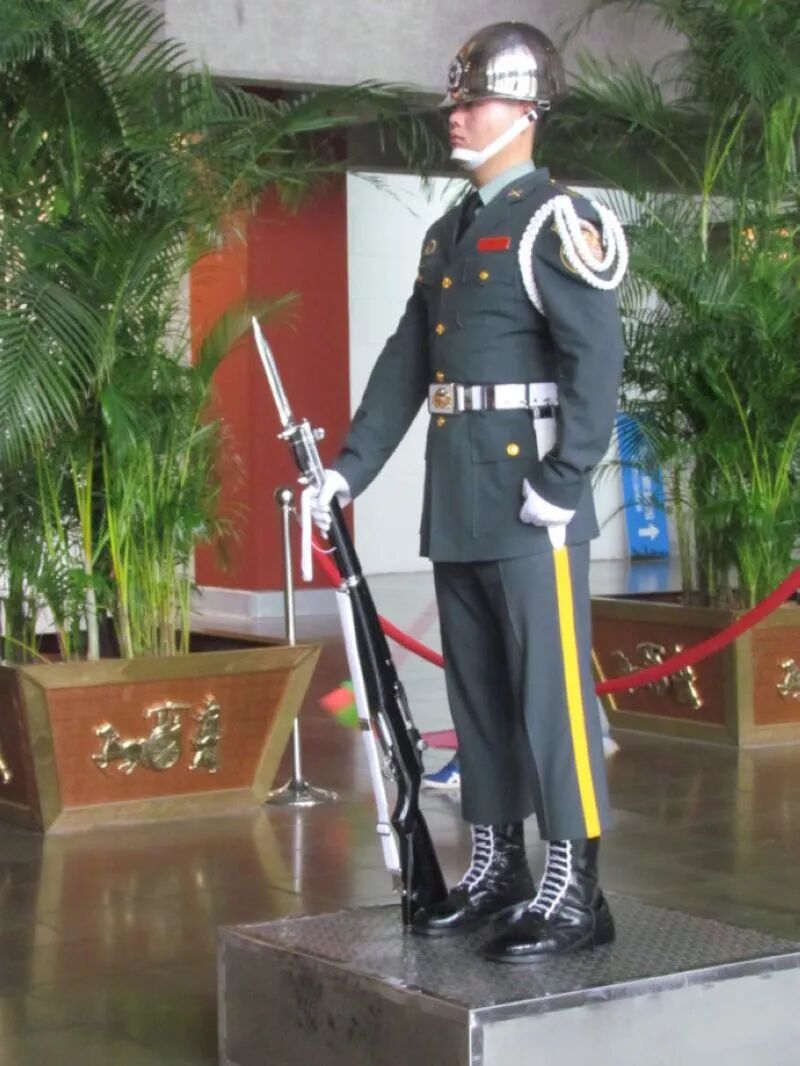
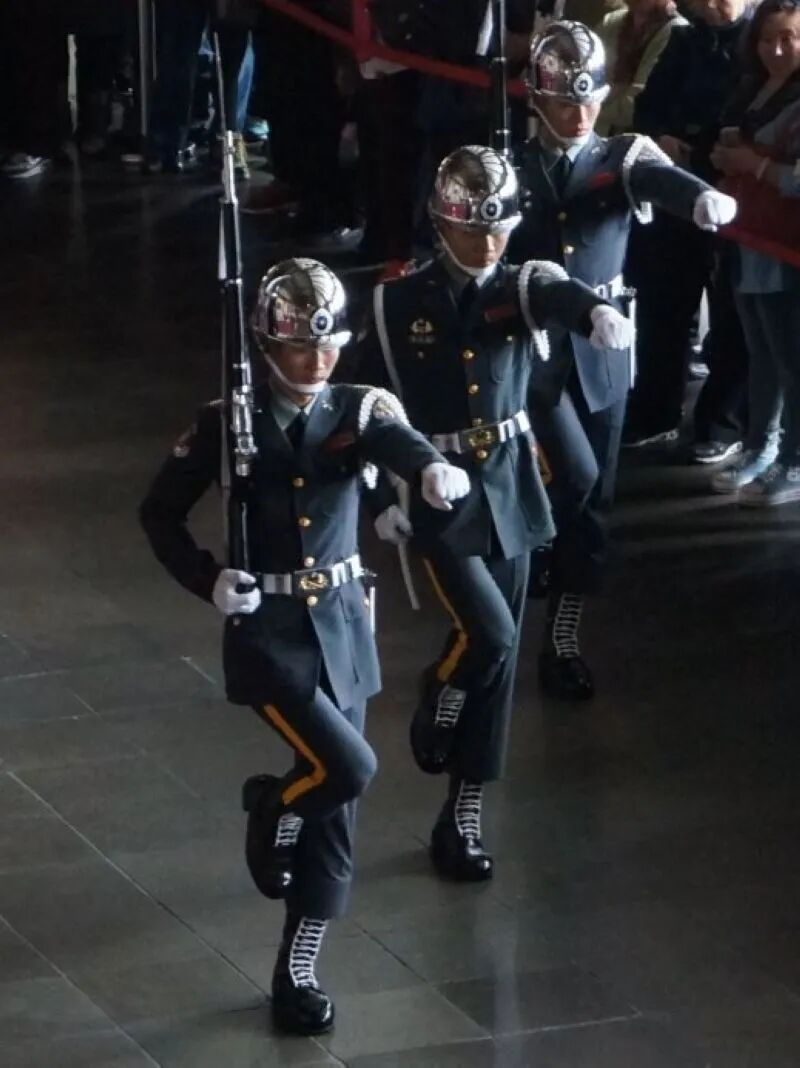
But then, like clockwork, it’s time for the changing of the guard! Out from the left-side resting room steps the new team, crisp in their sharp military uniforms, white gloves, and those special cleated leather boots, rifles slung over their shoulders.
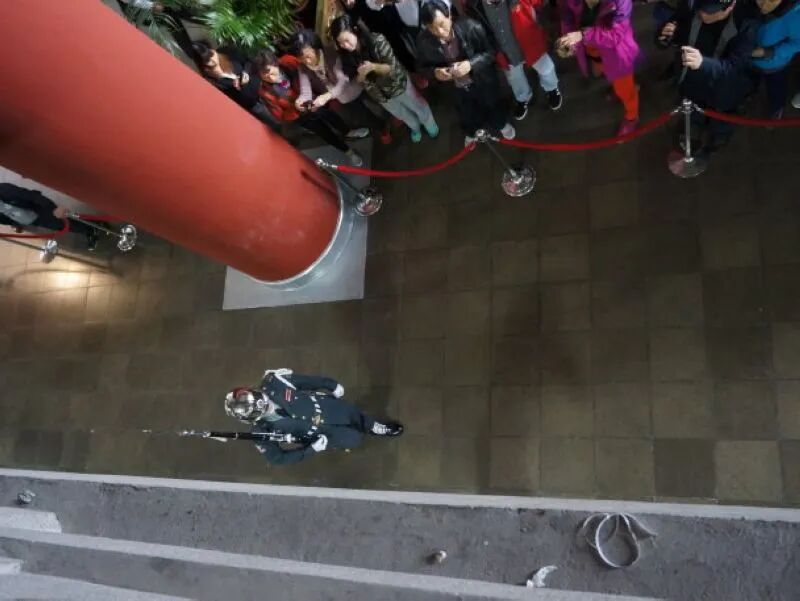
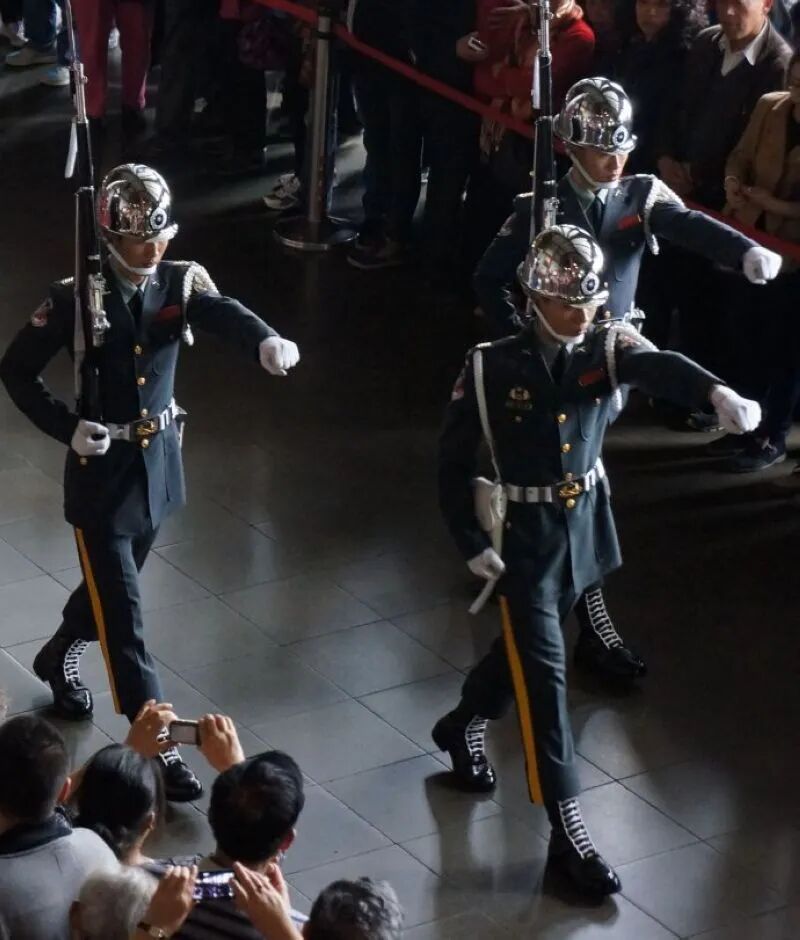
Each step they take is a masterclass in precision. They lift their feet high, then bring those boots down with a sharp, resounding *swish-swish* against the polished floor. It’s like a slow-motion, high-stepping dance: left foot out, thigh raised perpendicular to the ground, a brief, dramatic pause, then a powerful stomp. After two steps, they switch their rifle from shoulder-carry to a held position, slamming the buttstock down with a crisp “thud!” They march in this exact, measured way all the way to the center of the hall, facing the statue.
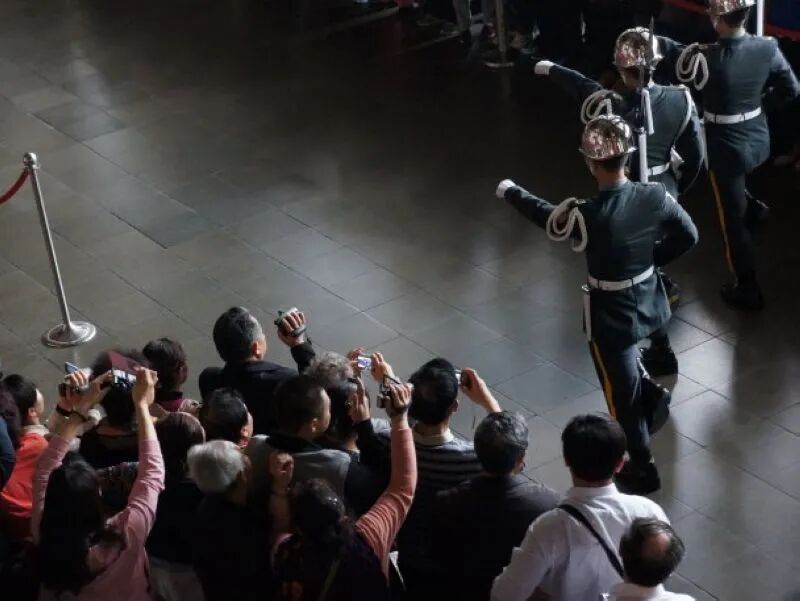
Led by their commander, they make their way to the exchange point. Tourists? Oh, they’ve been waiting for this! Cameras and phones are all up, capturing every single moment.
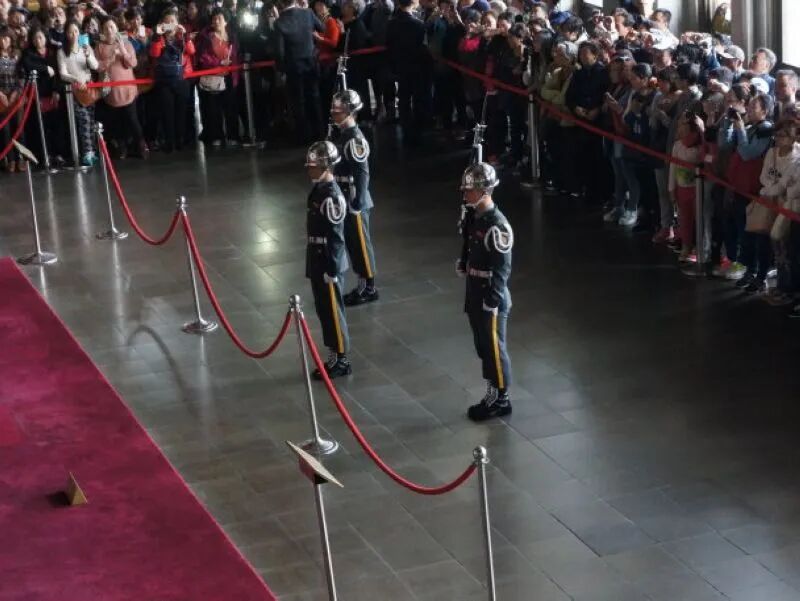
The ceremony kicks off. As the incoming guards reach Dr. Sun Yat-sen’s statue, the trio forms two rows – leader in front, new guards behind – standing at attention, facing the statue.
The two guards currently on duty subtly stretch their limbs, movements so slight you’d miss them if you weren’t looking, and perfectly synchronized. After these quick adjustments, they perform a few swift, elegant dismount actions. Seriously impressive!
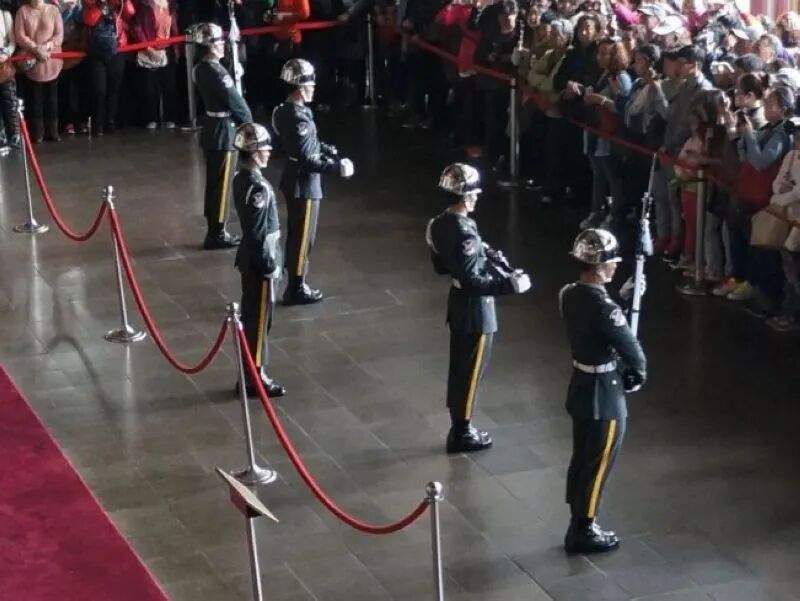
Next, the outgoing and incoming guards stand in a single line. With a powerful command from the leader, all guards salute Dr. Sun Yat-sen’s statue with a focused gaze.
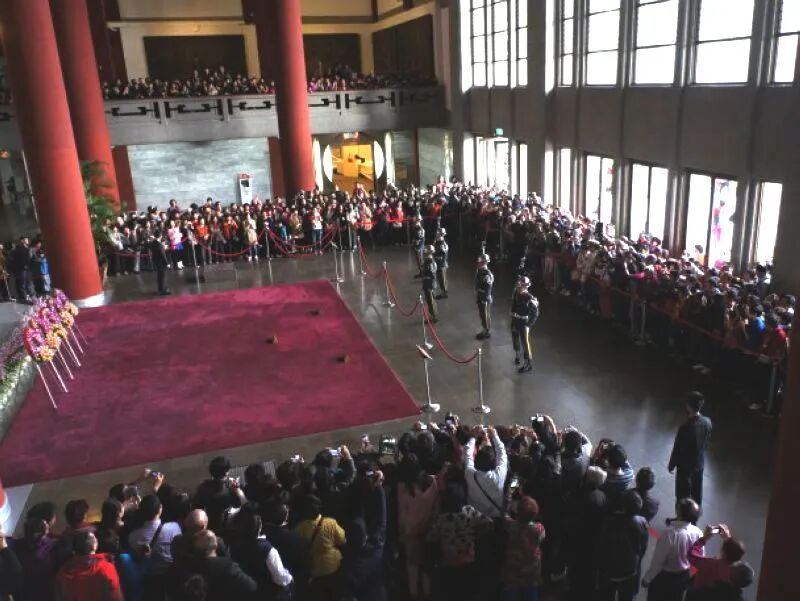
After the salute, it’s time for the “gun inspection.” This is where things get really theatrical! In a perfectly synchronized rhythm, they hold their rifles horizontally, making two sharp “clack-clack” sounds. Then, they spin the rifle twice to the left, twice to the right, three times forward, and three times back – it’s almost like a magic trick! After a quick left and right thrust, they slam the rifle butt to the ground with a loud “BAM!” and then tap it to create a series of crisp, mechanical clicks. The rifles just dance in their hands, making the tourists’ heads spin!
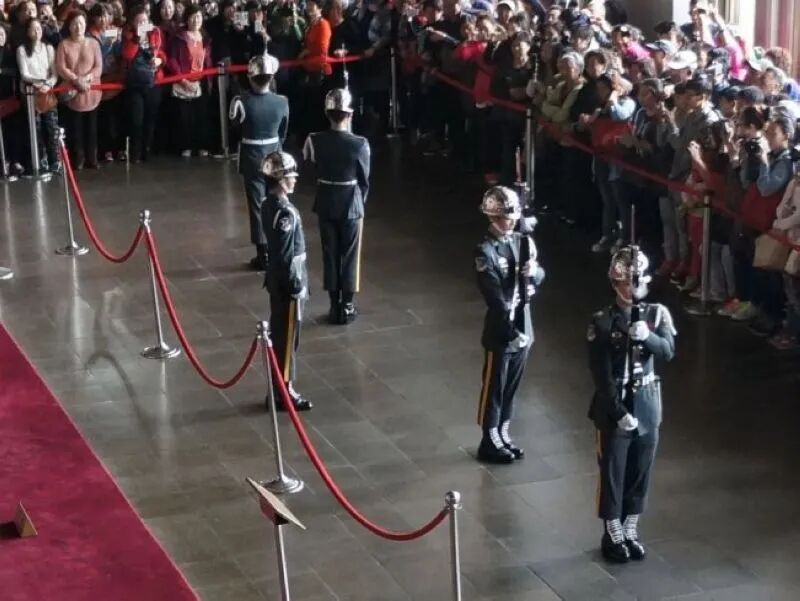
With flawless precision, the new guards march into position.
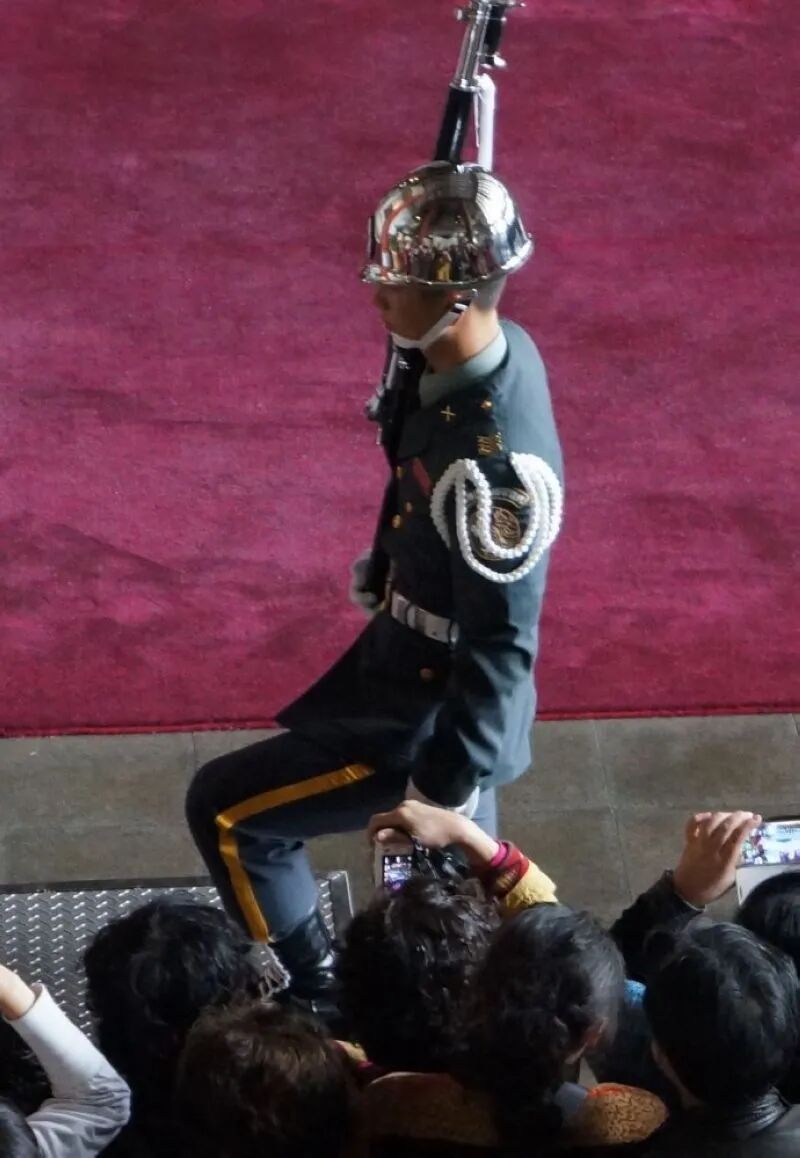
Finally, the outgoing guards, led by their commander, shoulder their rifles and exit the main hall, heading back to the resting room.
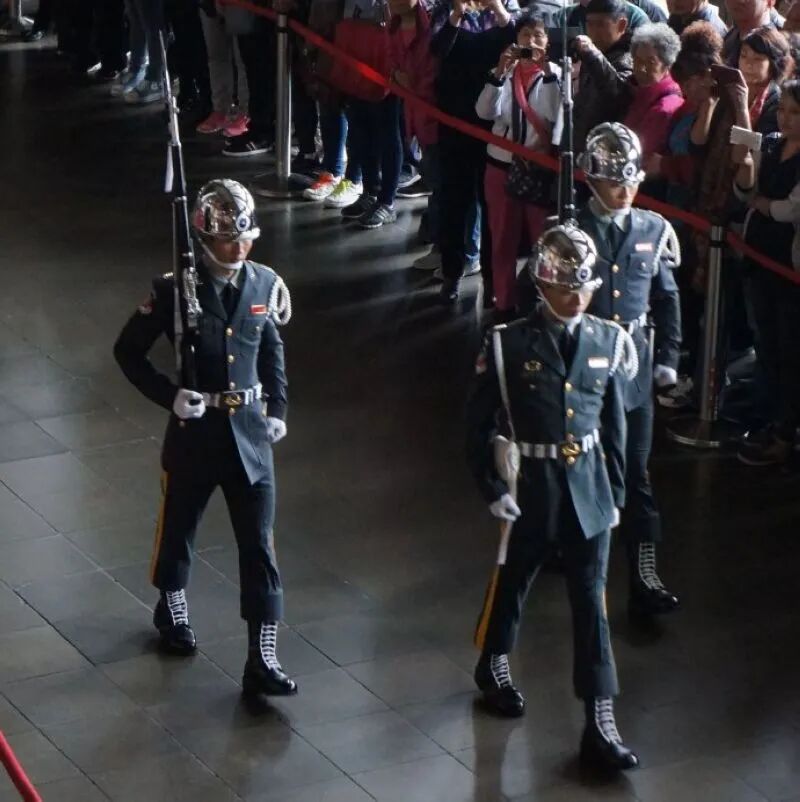
These young guys are definitely sharp and handsome, with their gleaming helmets and deep blue uniforms accented by white belts and sashes – looking all spiffy and authoritative! Full disclosure, though, I did notice their pants seemed a tad short, almost like capris or ankle-length trousers you’d see in fashion. It was a funny little detail that stood out against the otherwise impeccable uniforms.
Now, while their precision is undeniable, I couldn’t help but compare it slightly to other grand military ceremonies I’ve seen. But hey, in a tourist hotspot, a little ‘showmanship’ goes a long way, right? It’s definitely a crowd-pleaser and totally draws you in! And that, my friends, is exactly what it’s designed to do.
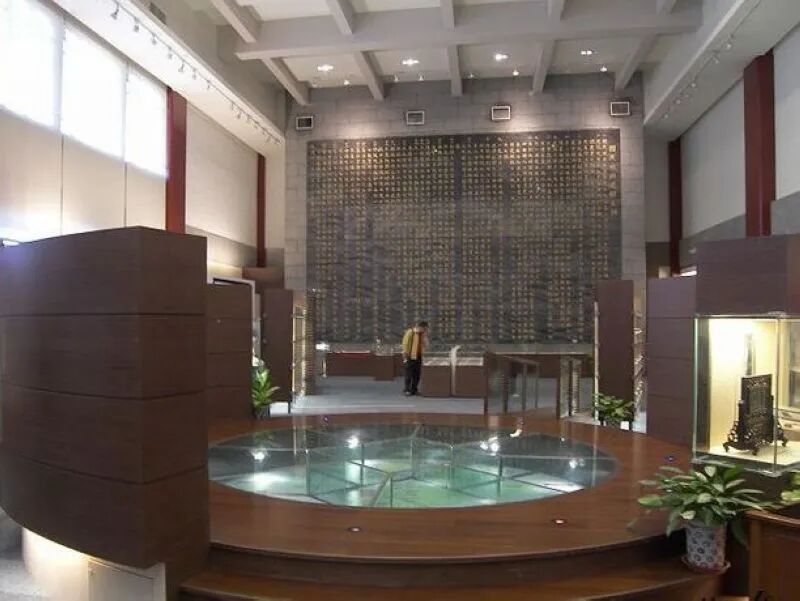
To the left and right of the main hall, you’ll find the spacious and impressive Dr. Sun Yat-sen Historical Exhibition. The East Exhibition Hall is all about Dr. Sun and the Republic of China, which he founded.
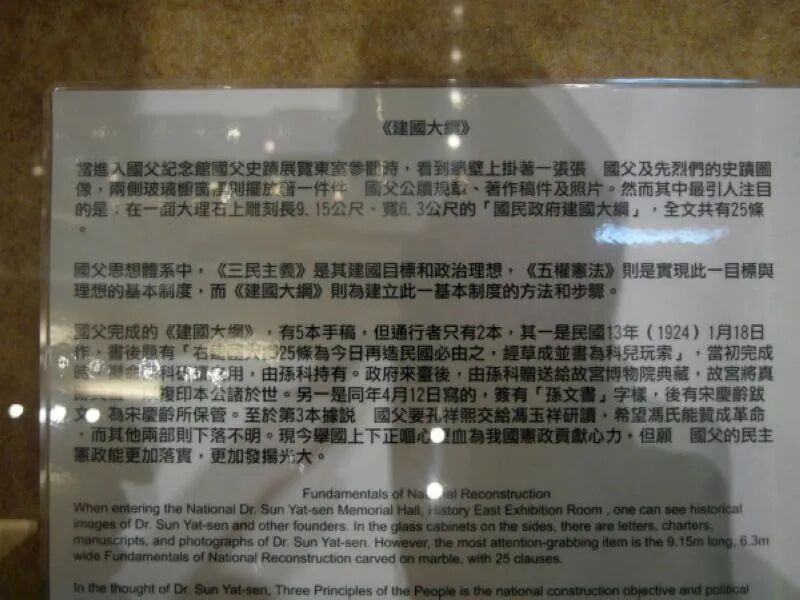
Here, you can find incredible artifacts like Dr. Sun Yat-sen’s handwritten “Outline of National Reconstruction,” penned on April 12, 1924. This 25-article document was his blueprint for national development after the Republic of China was established.
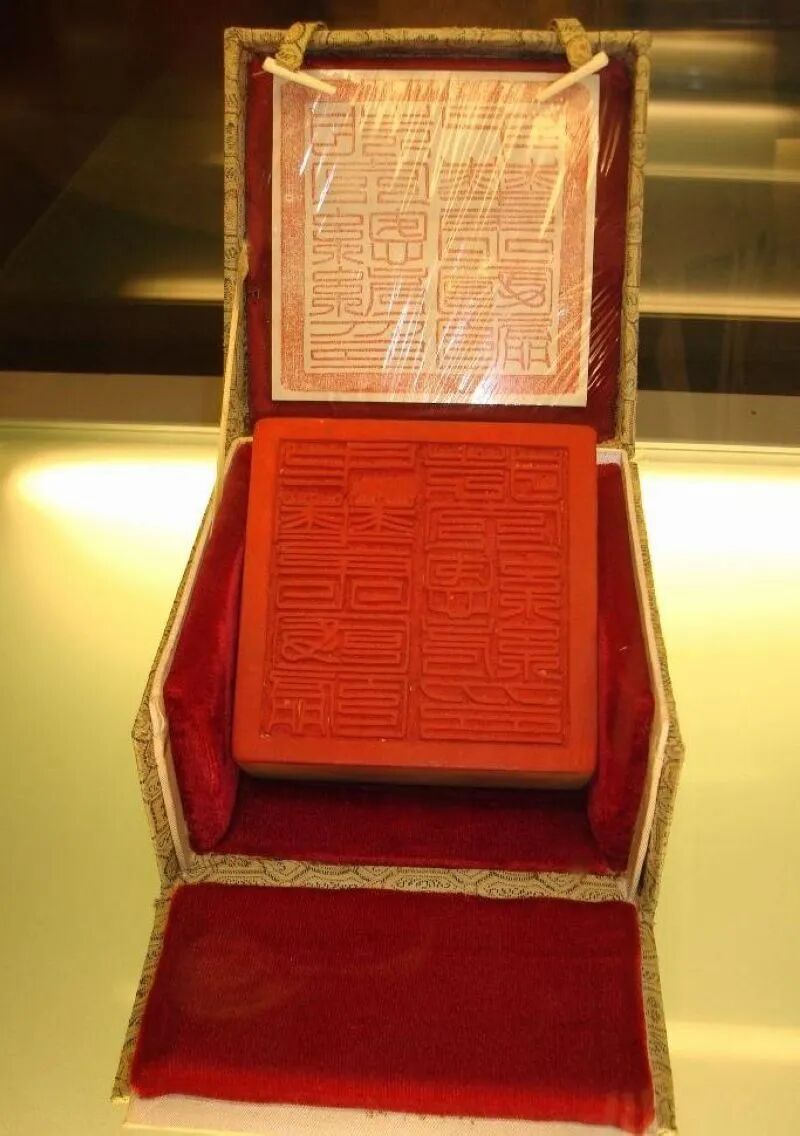
They also have the Provisional Presidential Seal of the Republic of China on display. Talk about history!
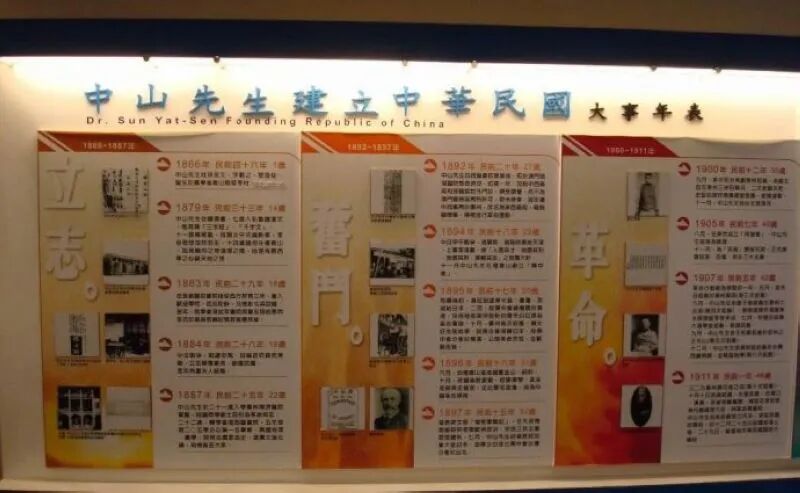
And a detailed timeline of the major events in the establishment of the Republic of China by Dr. Sun Yat-sen.
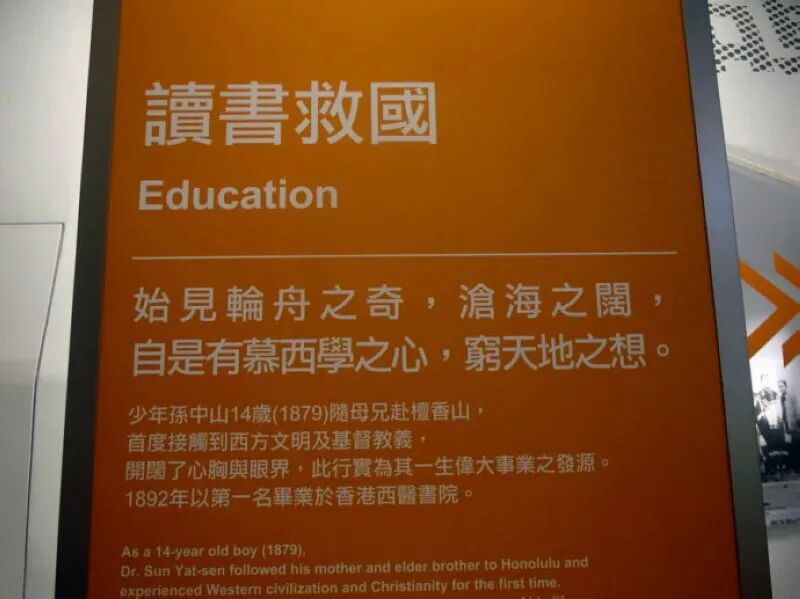
The exhibition traces Dr. Sun’s life through six key units, starting with “Studying for National Salvation.”
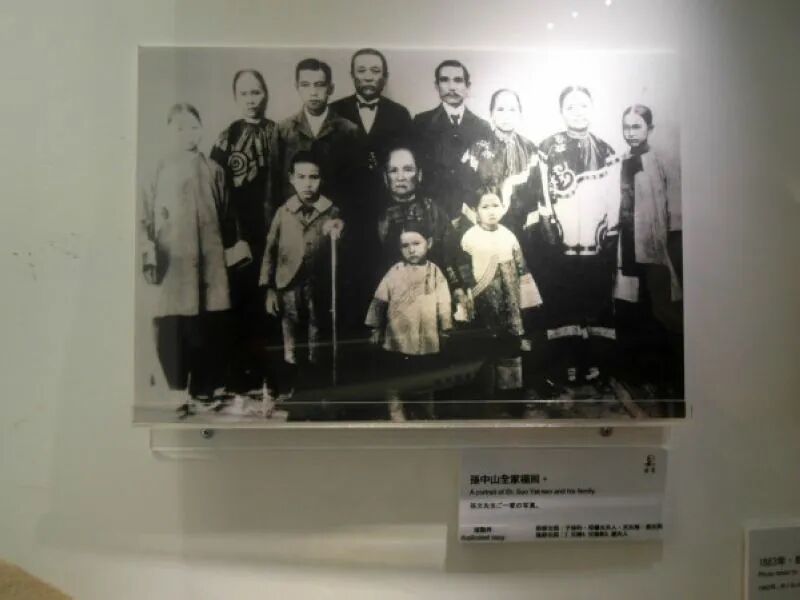
A family portrait of Dr. Sun Yat-sen.
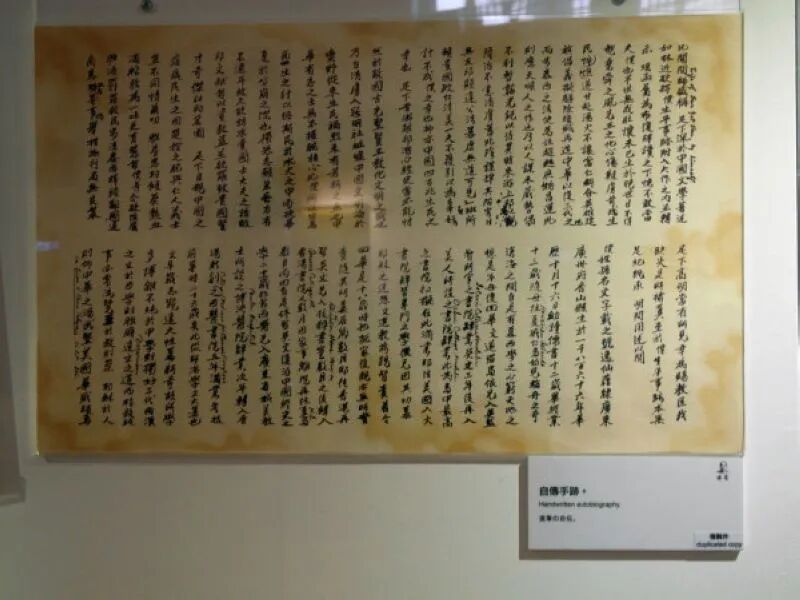
His handwritten autobiography.
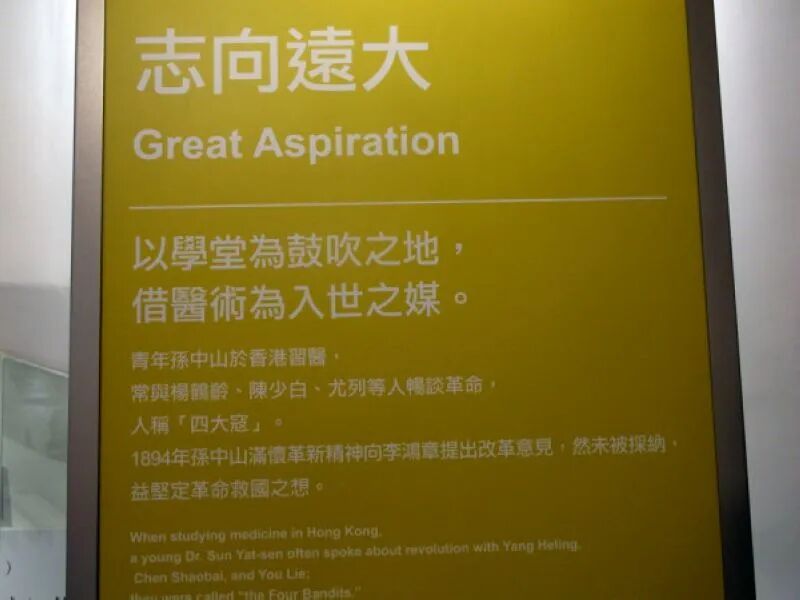
“Grand Ambition.”
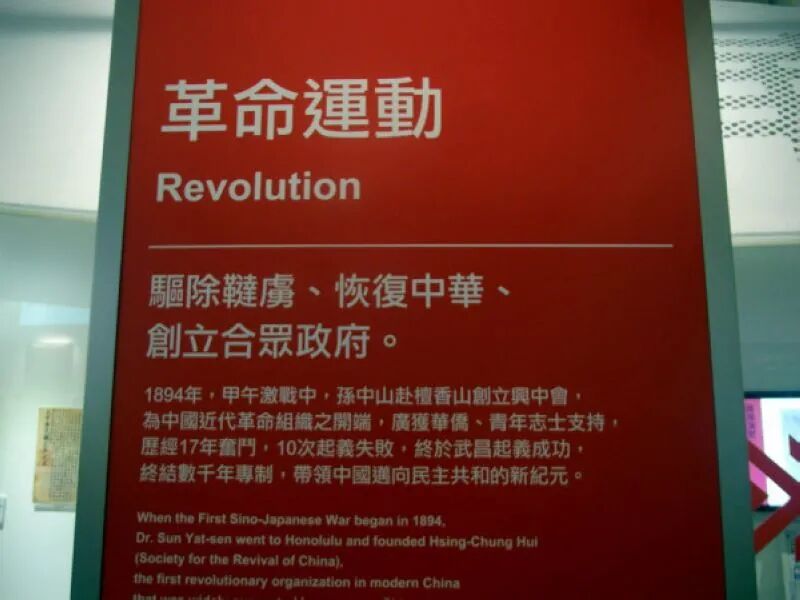
“Revolutionary Movement.”
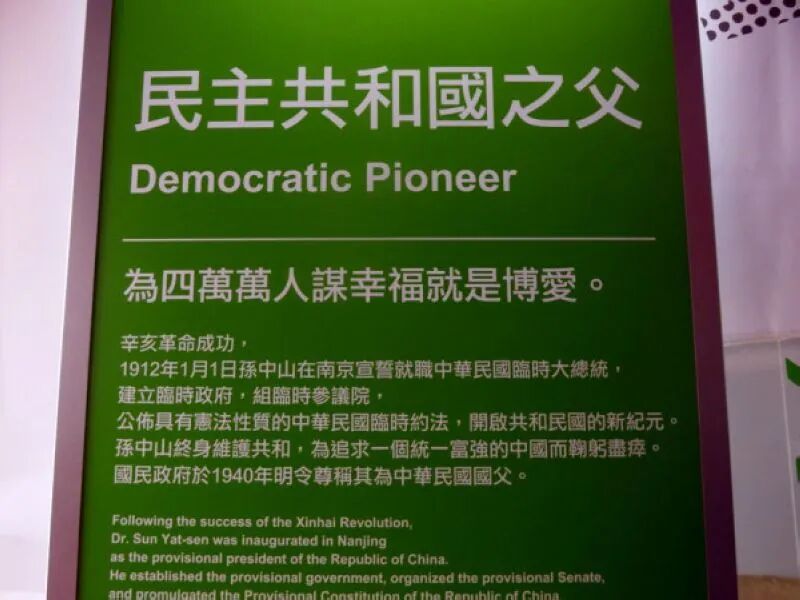
“Father of the Democratic Republic.”
“Realization of Ideals.”
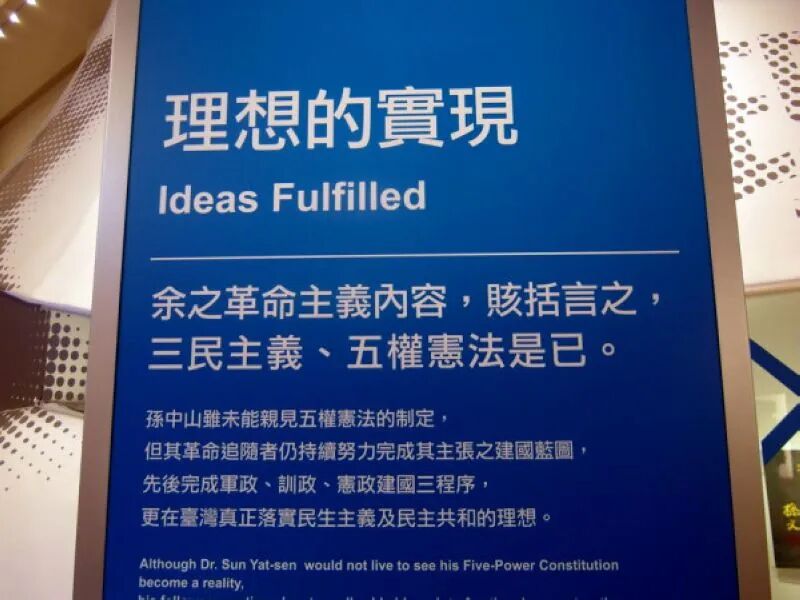
And “Sun Yat-sen for All.”
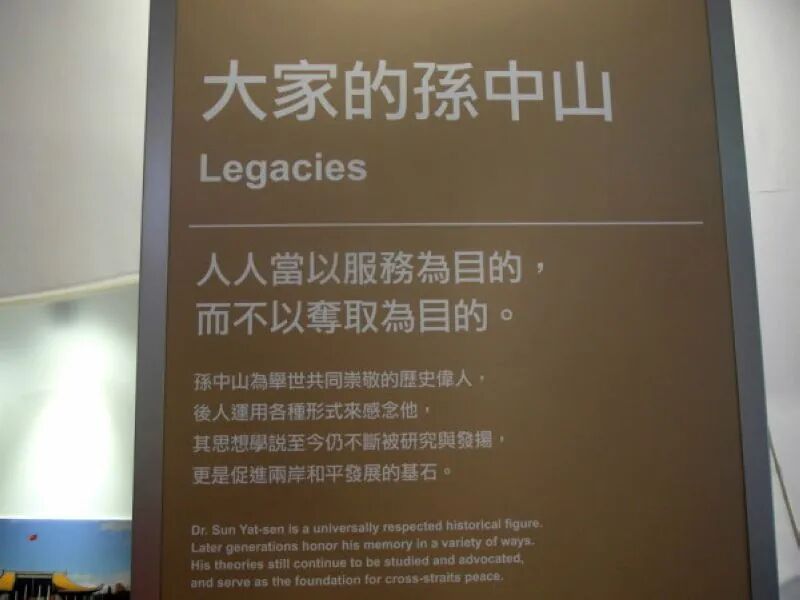
The exhibit features 122 precious historical documents and images. To truly showcase Dr. Sun’s profound philosophy, revolutionary spirit, and incredible character, they’ve even incorporated cutting-edge cloud-based audio-visual digital technology. It’s an immersive experience with surround sound and dazzling multimedia effects that play videos of Dr. Sun, giving you a comprehensive look at his monumental achievements throughout his life.
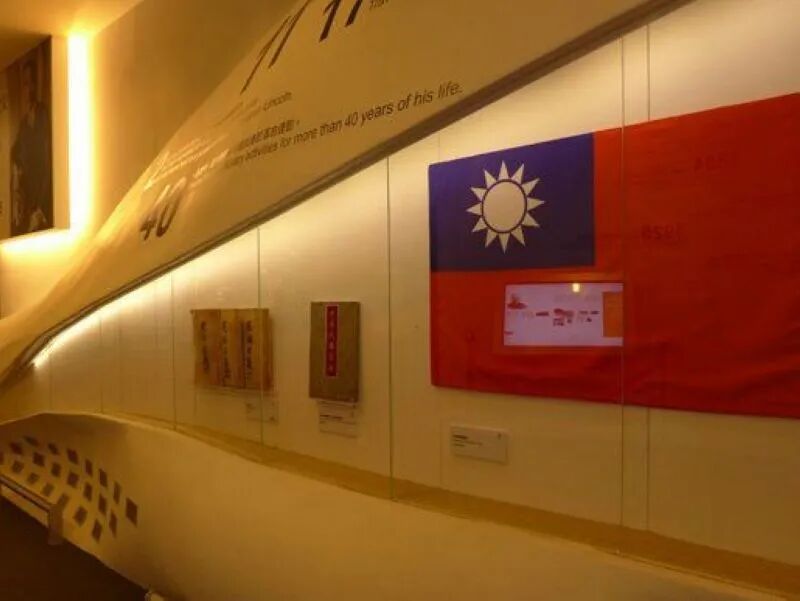
The exhibition design itself is stunning, with a massive national flag draped high and a spiral layout that guides you through the space, symbolizing Dr. Sun’s lifelong struggle for liberty, equality, and fraternity. The floor, with its red, blue, and gray colors, echoes the grandeur, creating a truly powerful atmosphere.
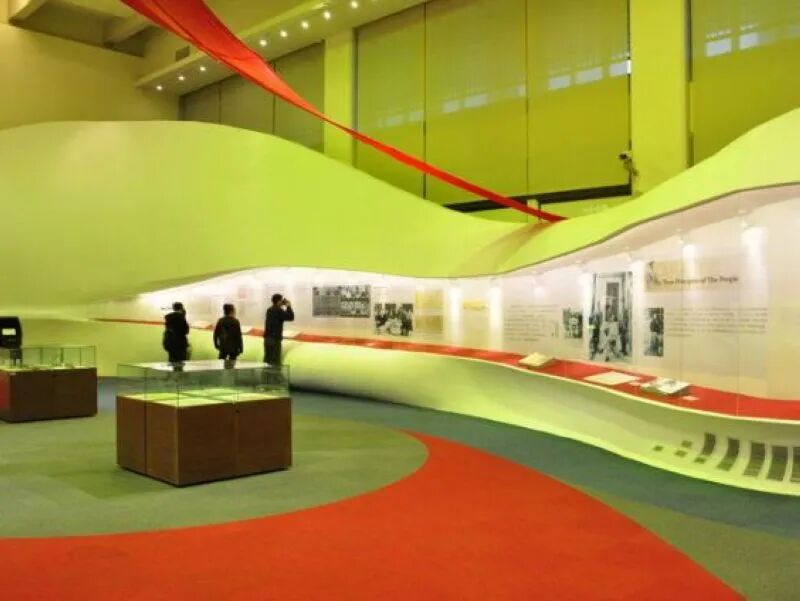
The West Exhibition Hall, on the other hand, focuses on Dr. Sun Yat-sen’s connection with Taiwan and also provides an overview of Taiwan’s history. It’s super informative!
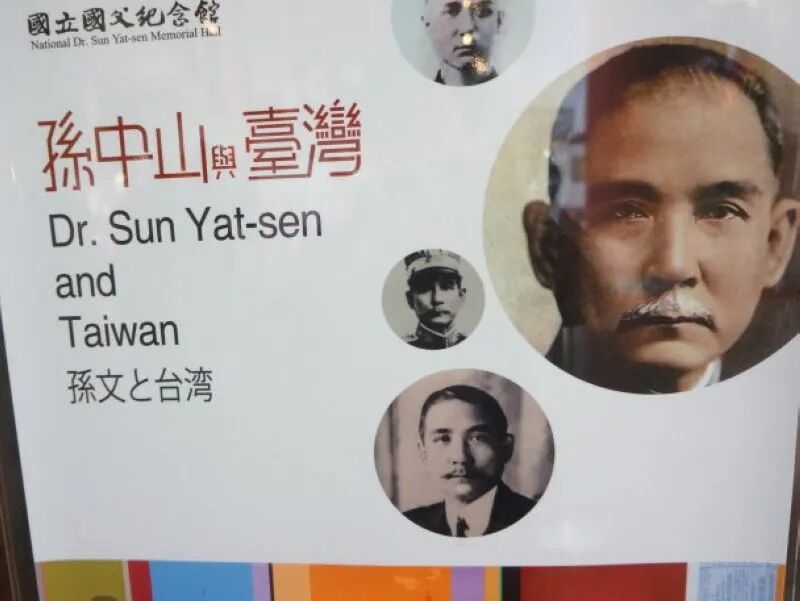
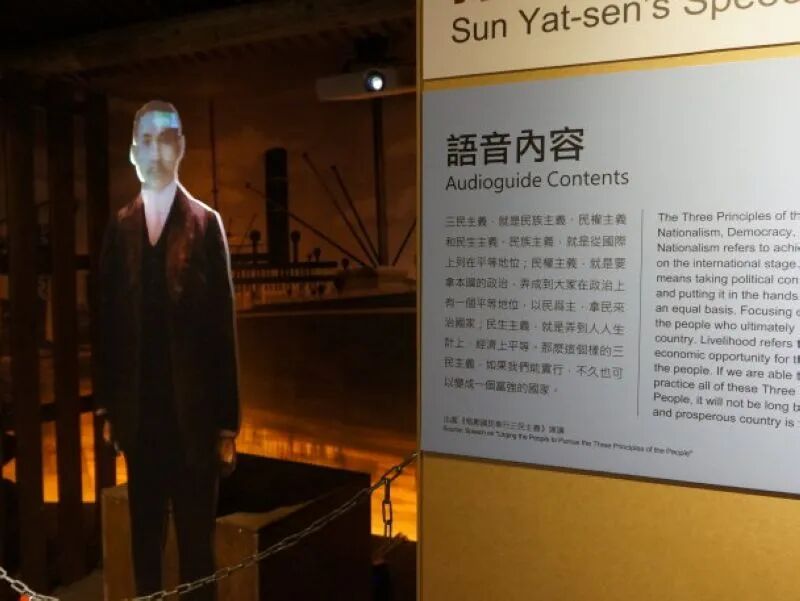
And get this: they even use modern tech to bring Dr. Sun Yat-sen’s “Three Principles of the People” speeches to life. Super cool!
On the north side of the first floor, you’ll find the incredible Auditorium, a massive space spanning 2,844 square meters (over 30,000 sq ft!) with seating for more than 2,500 people. It’s the largest national-level performance venue on the island! There are also lecture halls, the Sun Yat-sen Lecture Hall, and the Yi Hsien Bookstore, often hosting academic and lifestyle talks. So much happening here!
Here’s a look at the second-floor plan.
On either side of Dr. Sun Yat-sen’s bronze statue, there are two striking paintings.
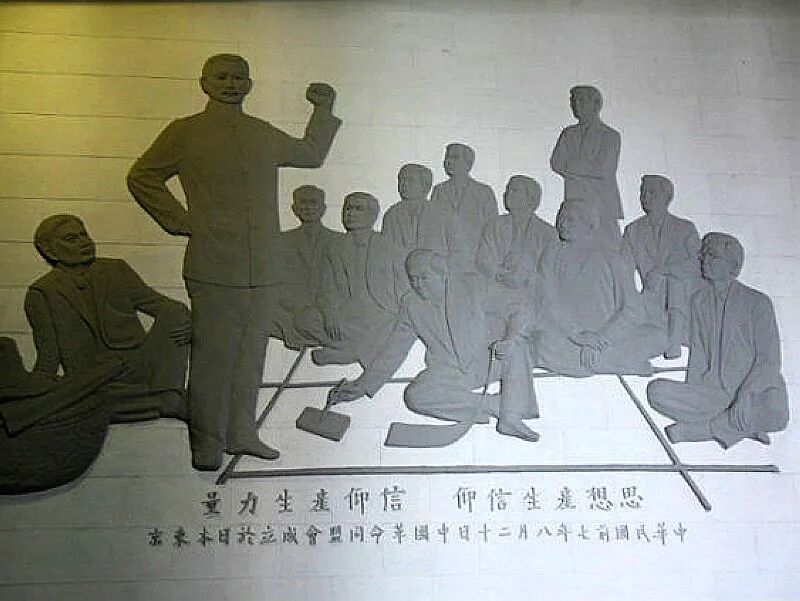
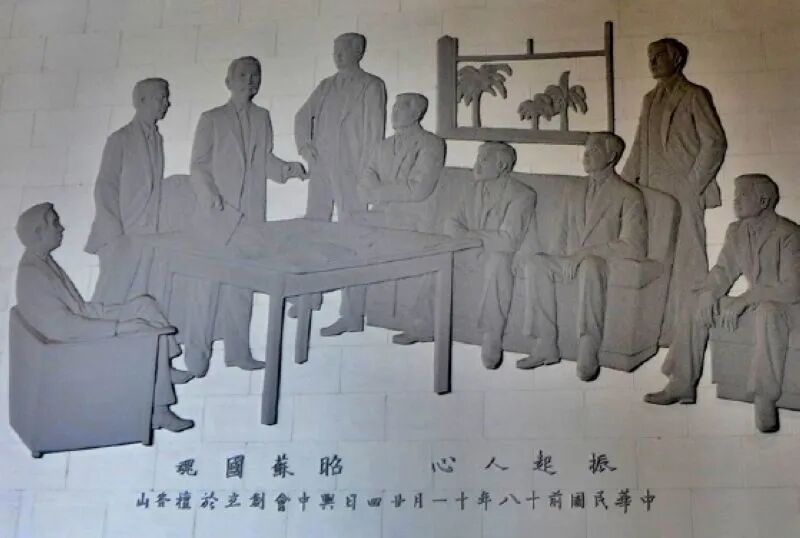
The corridors on the second floor feature a series of impressive bronze relief sculptures.
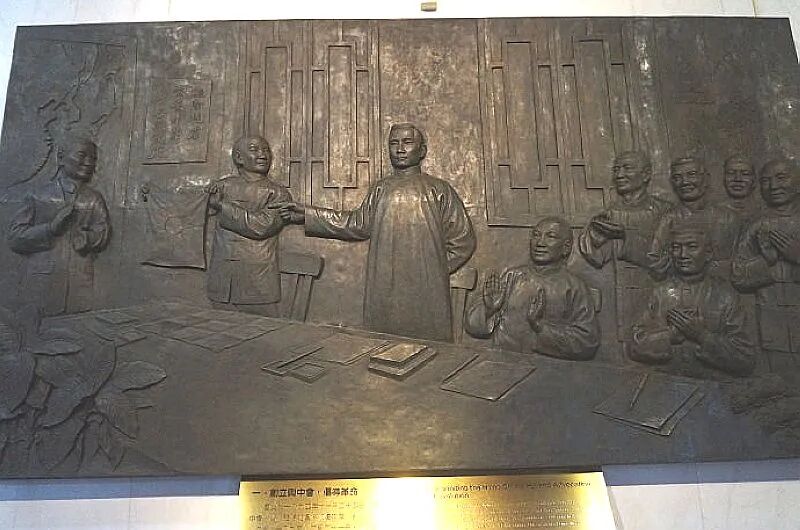
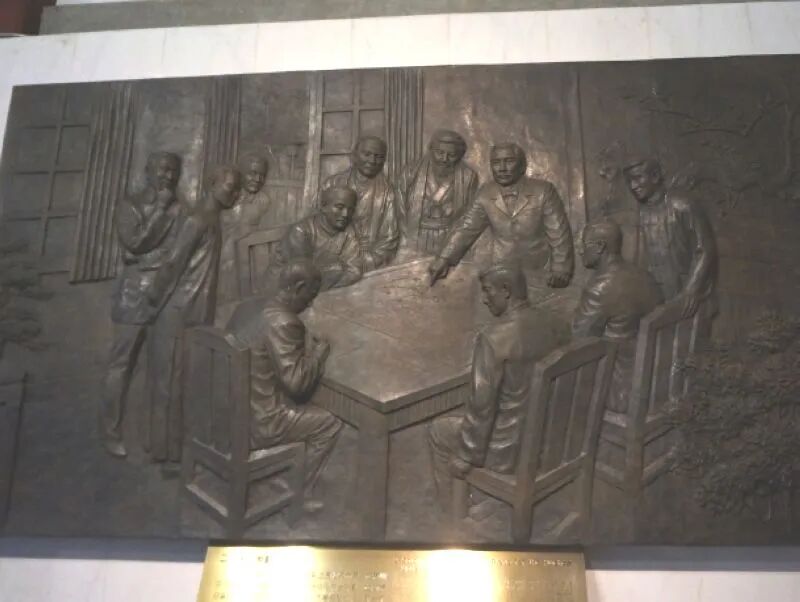
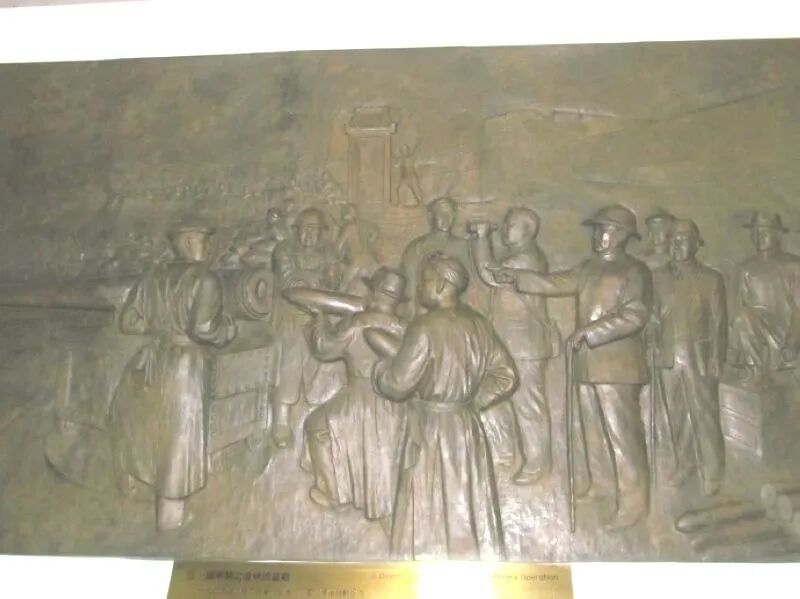
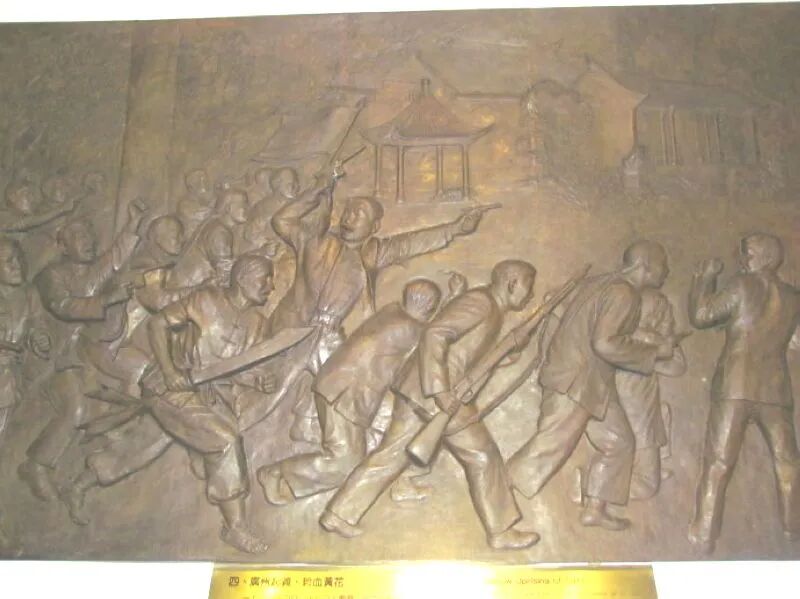
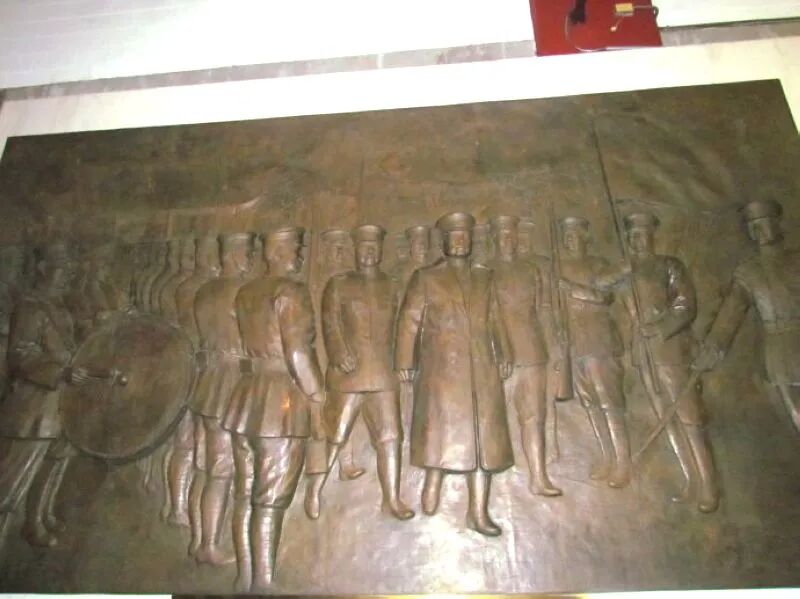
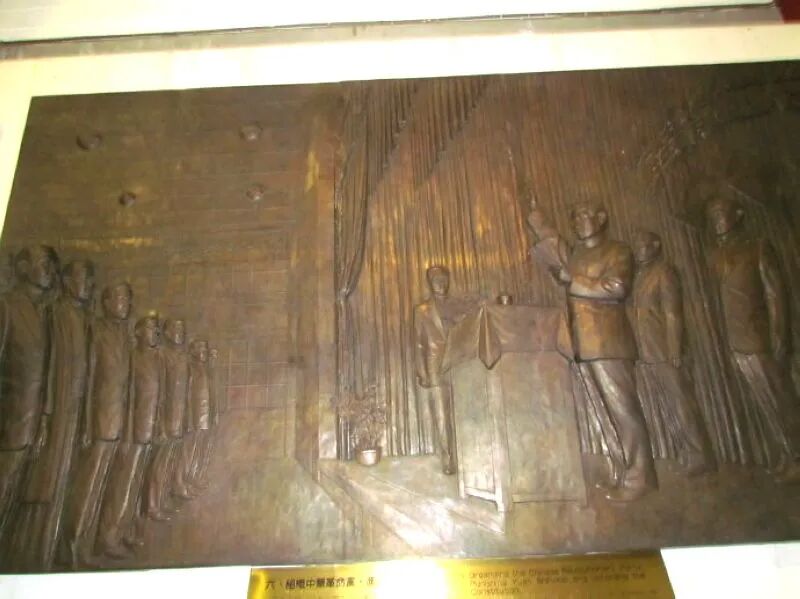
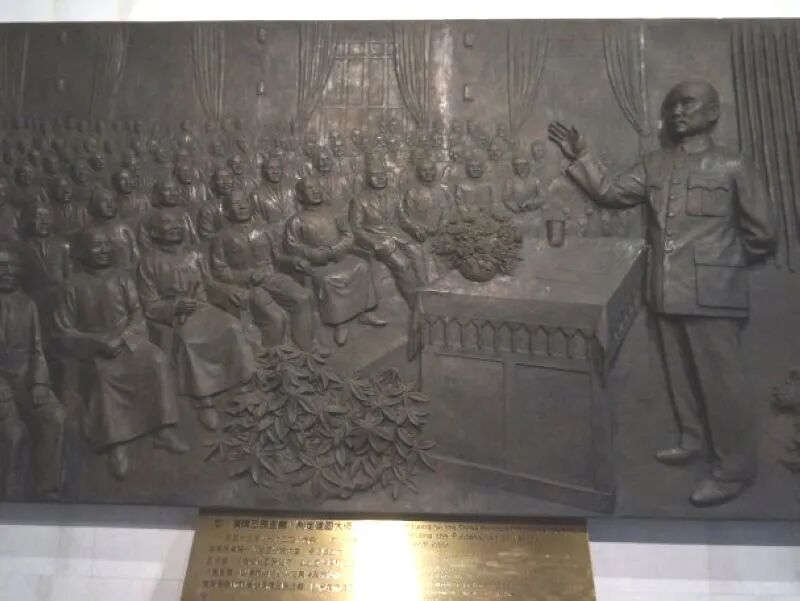
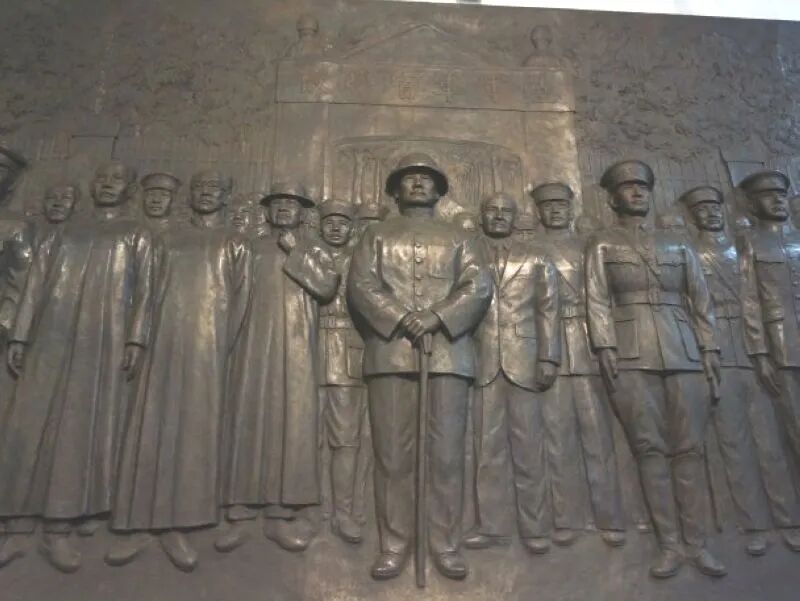
Directly across from the second-floor staircase is a long art gallery, where glass showcases proudly display calligraphy and paintings from renowned artists, all with a distinct Chinese flair. Beyond that, the third floor houses the Yixian Art Gallery, Deming Art Gallery, and the Yixian Projection Room. And downstairs in the basement, you’ll find the Cuiheng Art Gallery, Zai Zhi Xuan, Cuixi Art Gallery, a reading room, and an audio-visual center. It’s a true hub for arts, culture, and educational events for Taipei residents! I wish I had more time to explore every single corner, but alas, a girl has to keep moving!
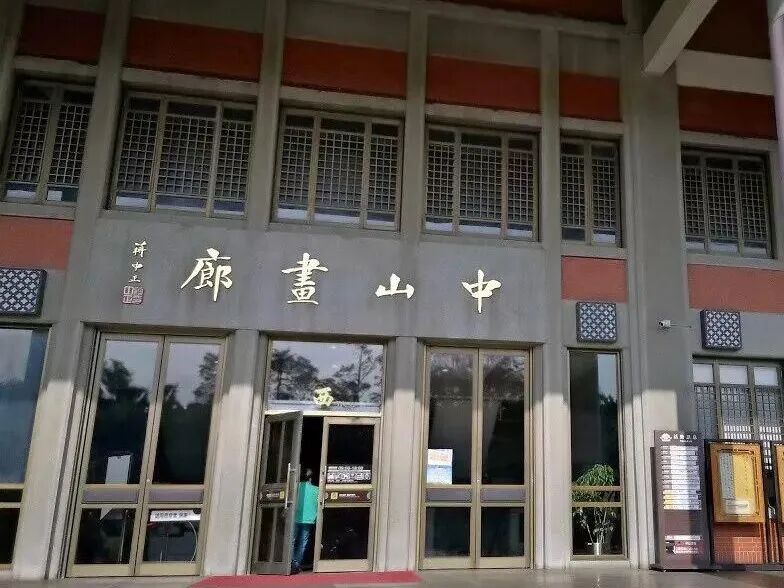
The west gate of the Memorial Hall leads to the Zhongshan Gallery.
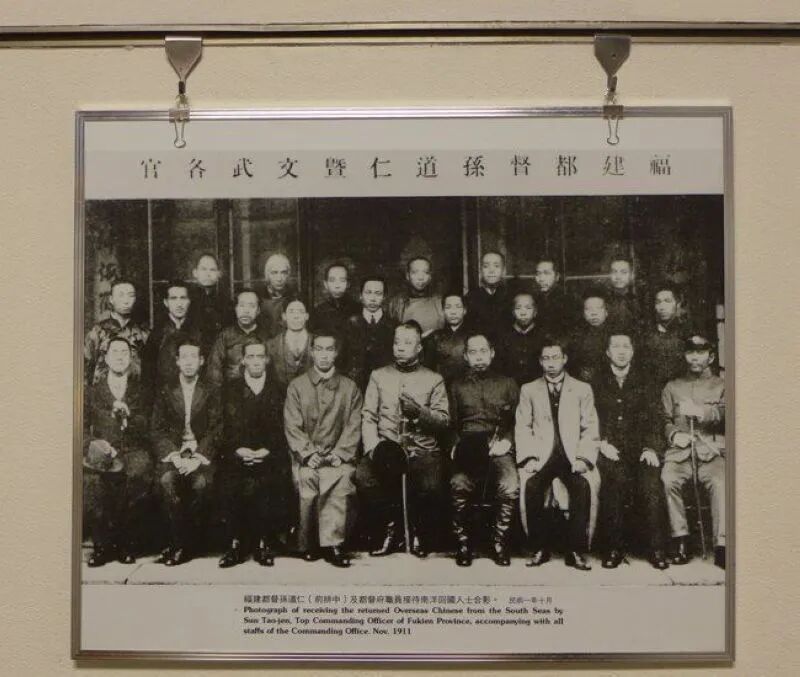
Heading straight up to the second floor, you’ll discover even more priceless historical photographs.
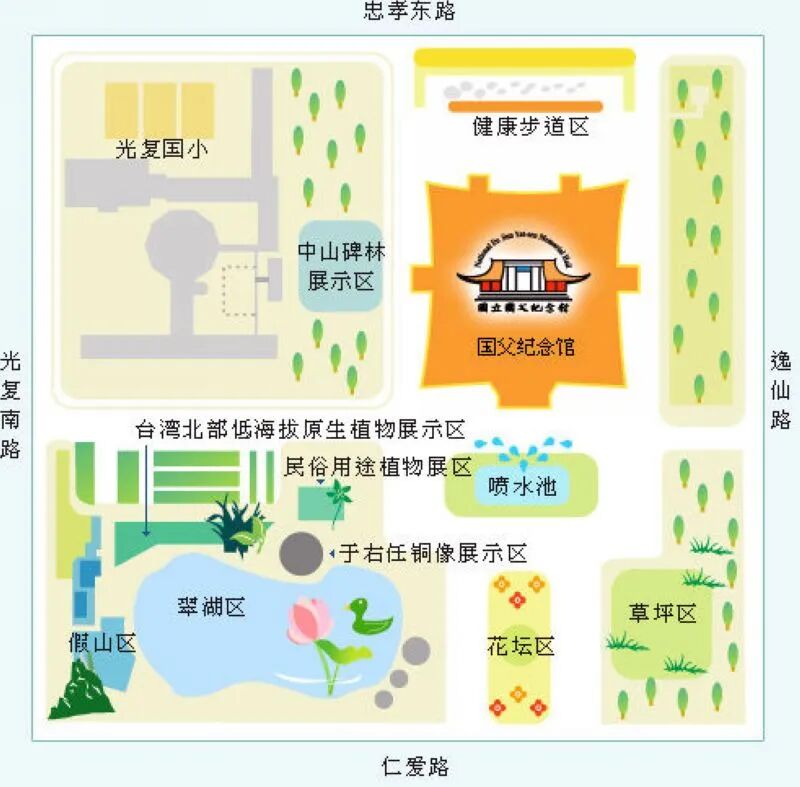
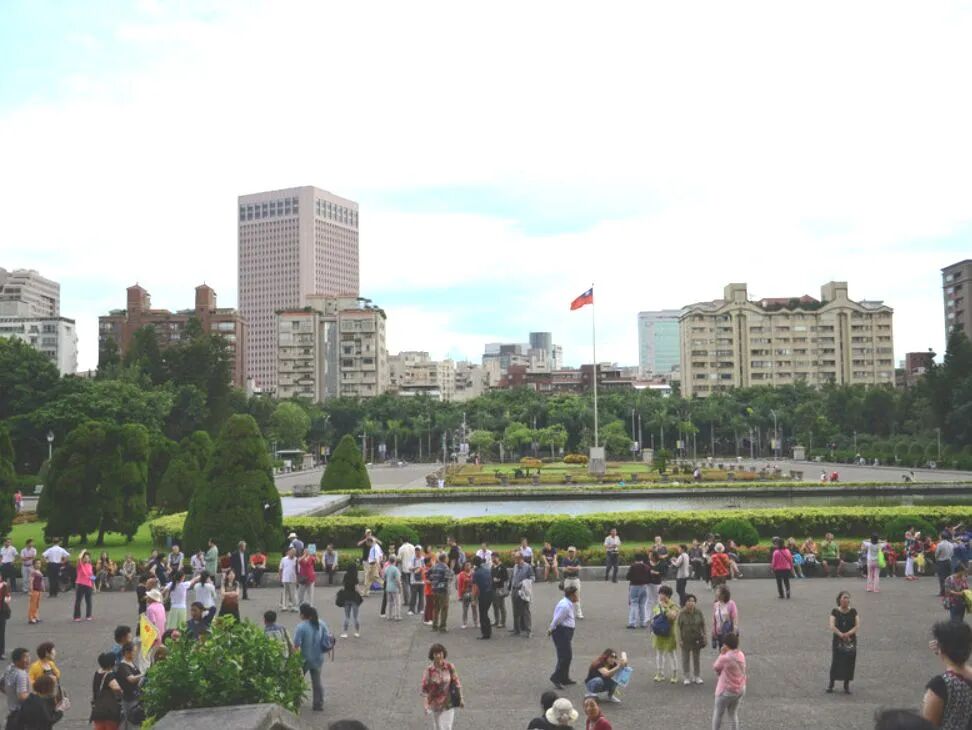
Outside, the Hall is surrounded by a sprawling 110,000-square-meter Zhongshan Park, complete with winding bridges, ponds, rock gardens, and graceful weeping willows. The park is essentially centered around the flagpole, fountain, and the Memorial Hall itself. Trees and flowers are planted symmetrically on either side. To the north, there’s a 120-meter long, 1.2-meter wide health path paved with dark green pebbles from Hualien – perfect for a barefoot stroll! To the south, you’ll find a beautiful fountain, flower beds, and lush lawns.
In the narrow green space in front of the west gate, there’s a seated statue of Dr. Sun Yat-sen, and behind a flower bed, a standing statue. It’s like a double dose of history!
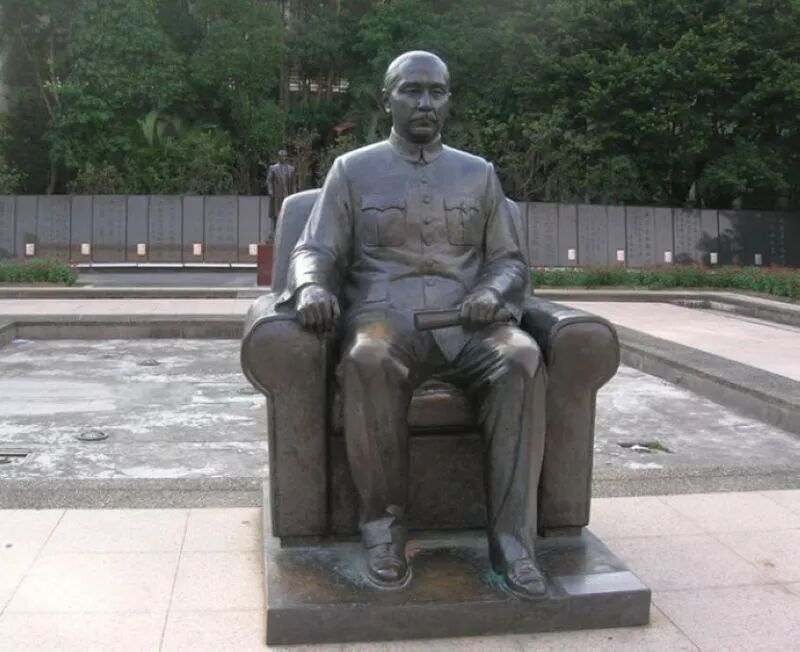
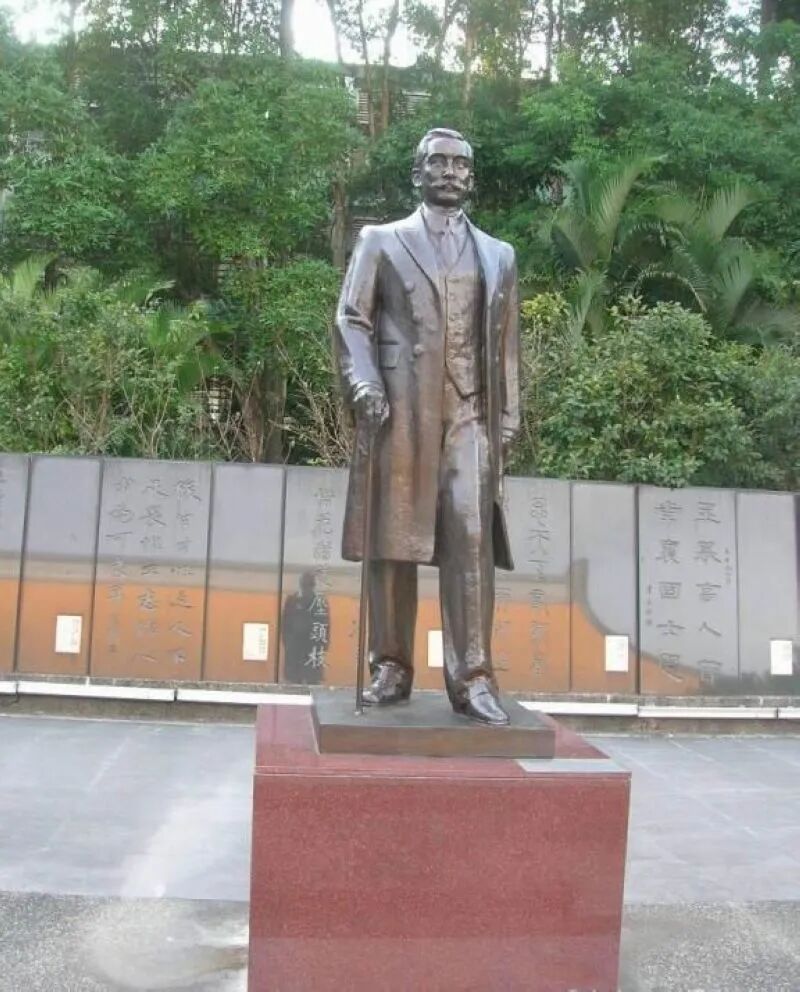
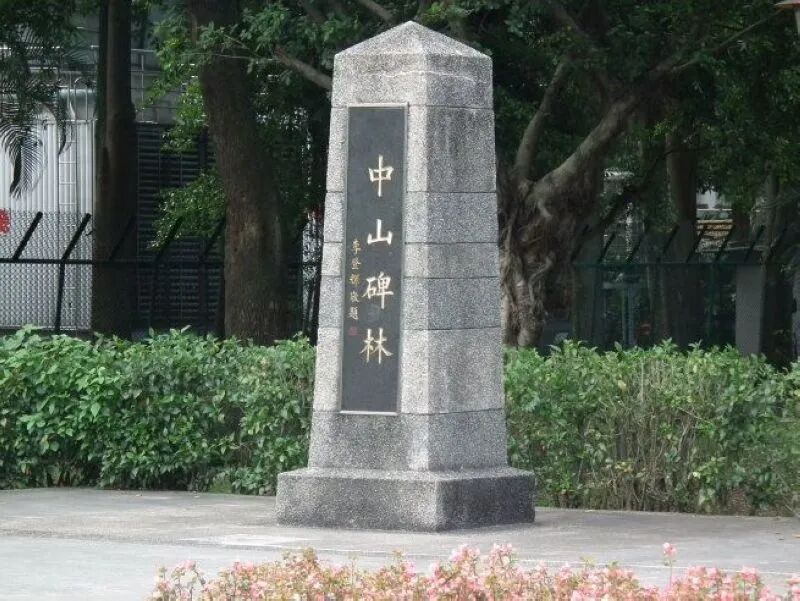
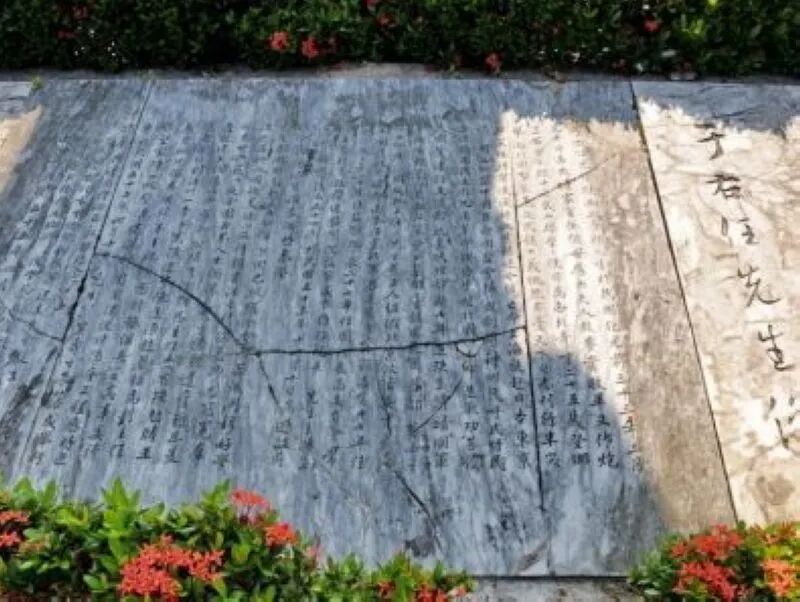
Adjacent to the statues on the west side is the Zhongshan Stele Forest, an area showcasing 21 calligraphic works and rubbings. These are from 12 revolutionary martyrs who fought alongside Dr. Sun Yat-sen to establish the Republic of China (like Huang Xing and Qiu Jin) and seven esteemed elders (like Lin Sen and Cai Yuanpei). It’s a powerful tribute to their noble spirit and dedication to the nation.
“Loyalty to the Nation.”
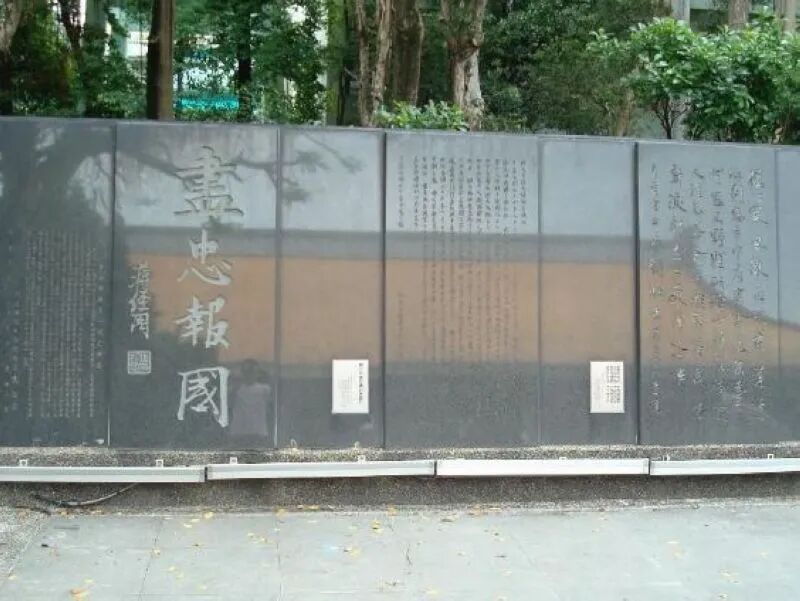
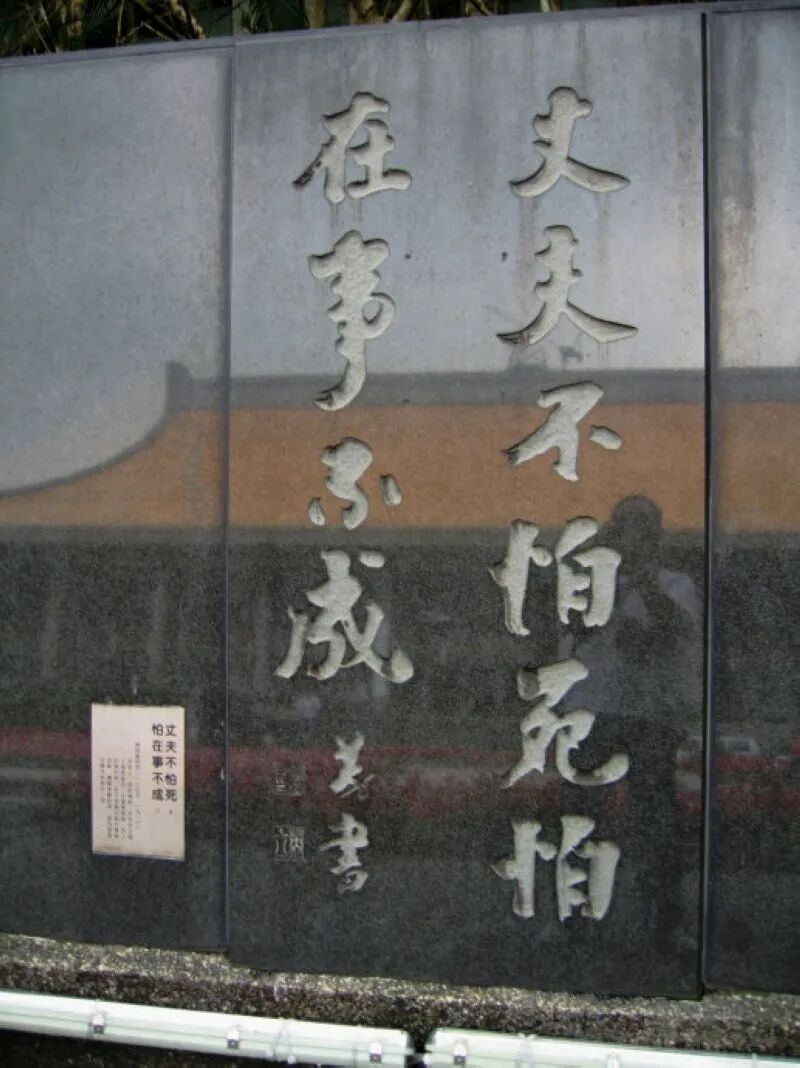
Calligraphic artistry.
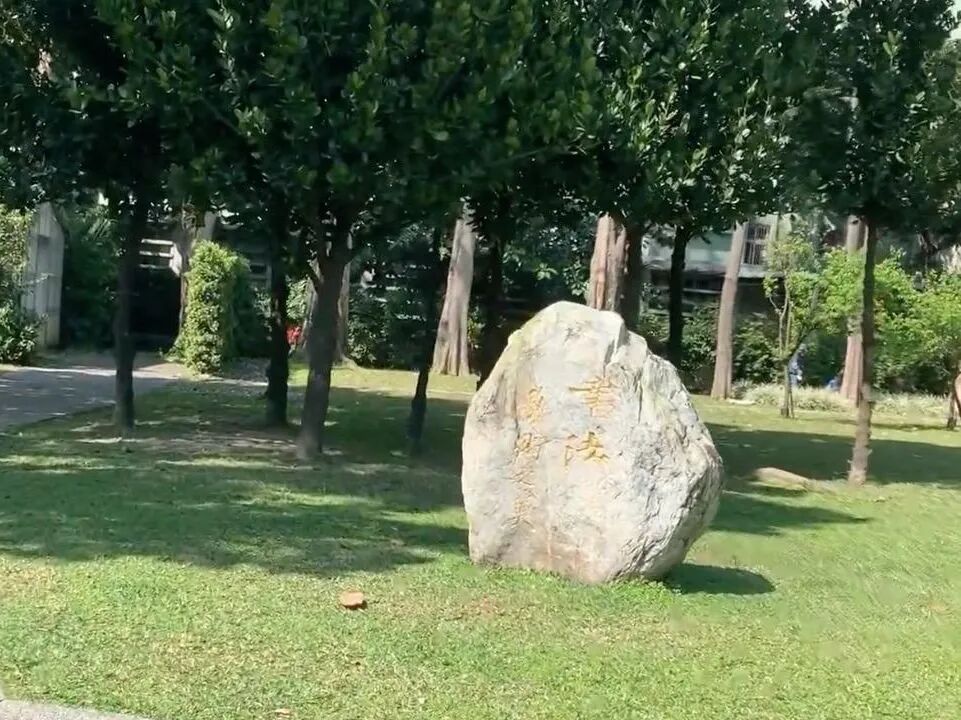
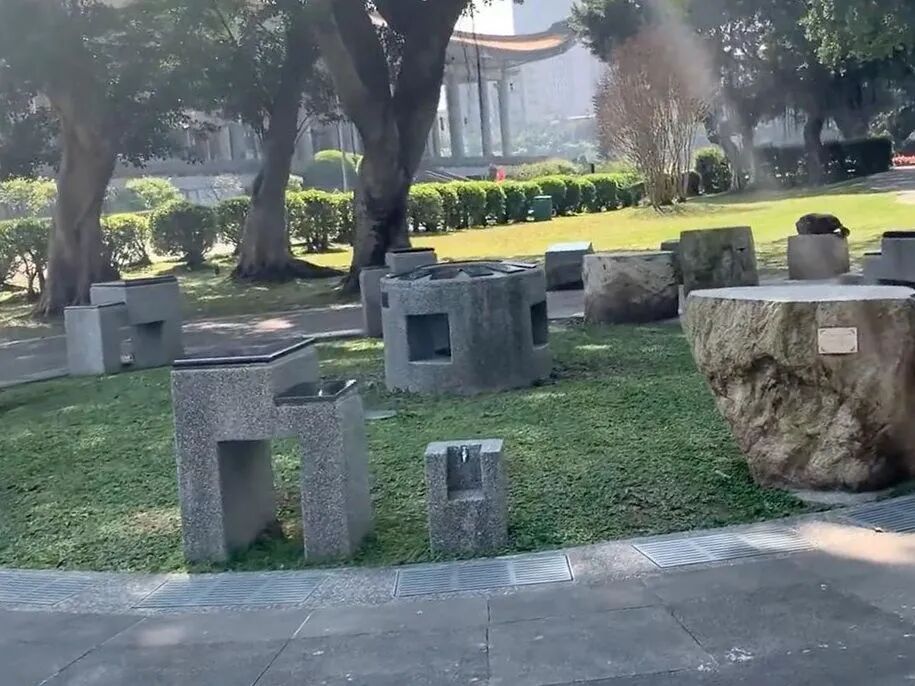
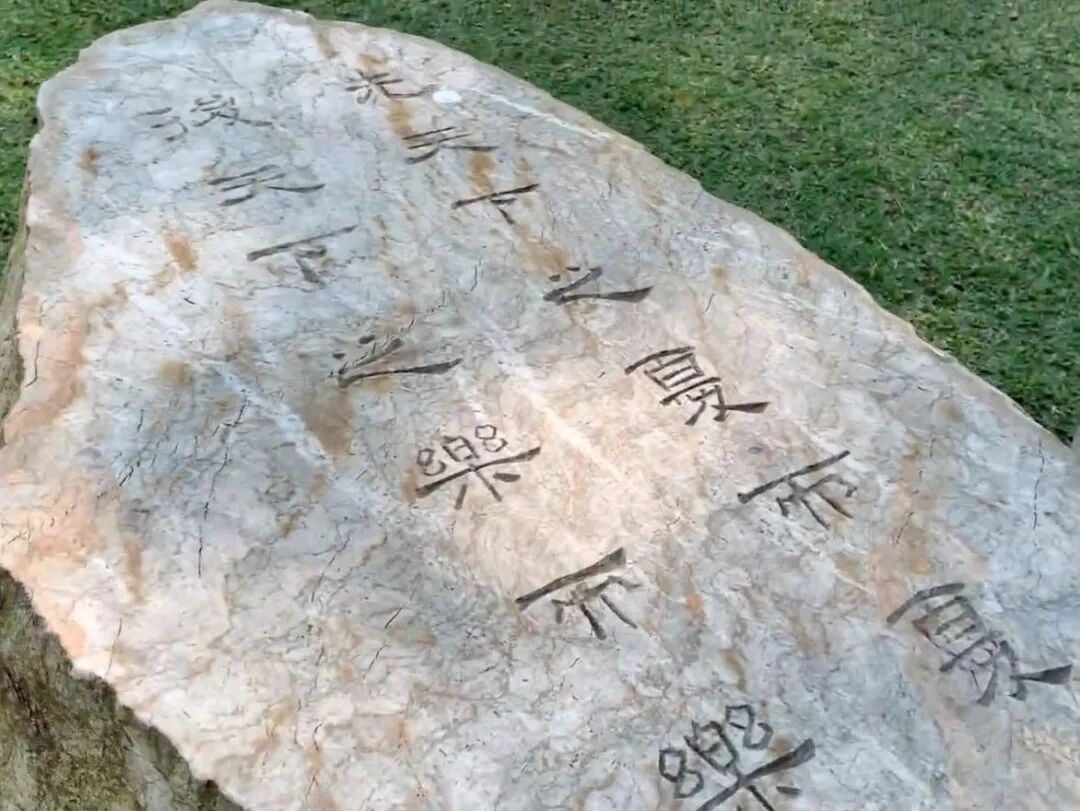
In the southwest corner of the park, you’ll find Cuihu Lake, an expansive artificial lake covering about 8,000 square meters (that’s almost two acres!), named after Dr. Sun Yat-sen’s hometown, Cuiheng Village. It’s the largest artificial lake in Taipei City! The lake features the Xiangshan Bridge and Cuiheng Pavilion, with the pavilion having been donated by the Taipei City Yamaroku Lions Club and completed on March 12, 1981.
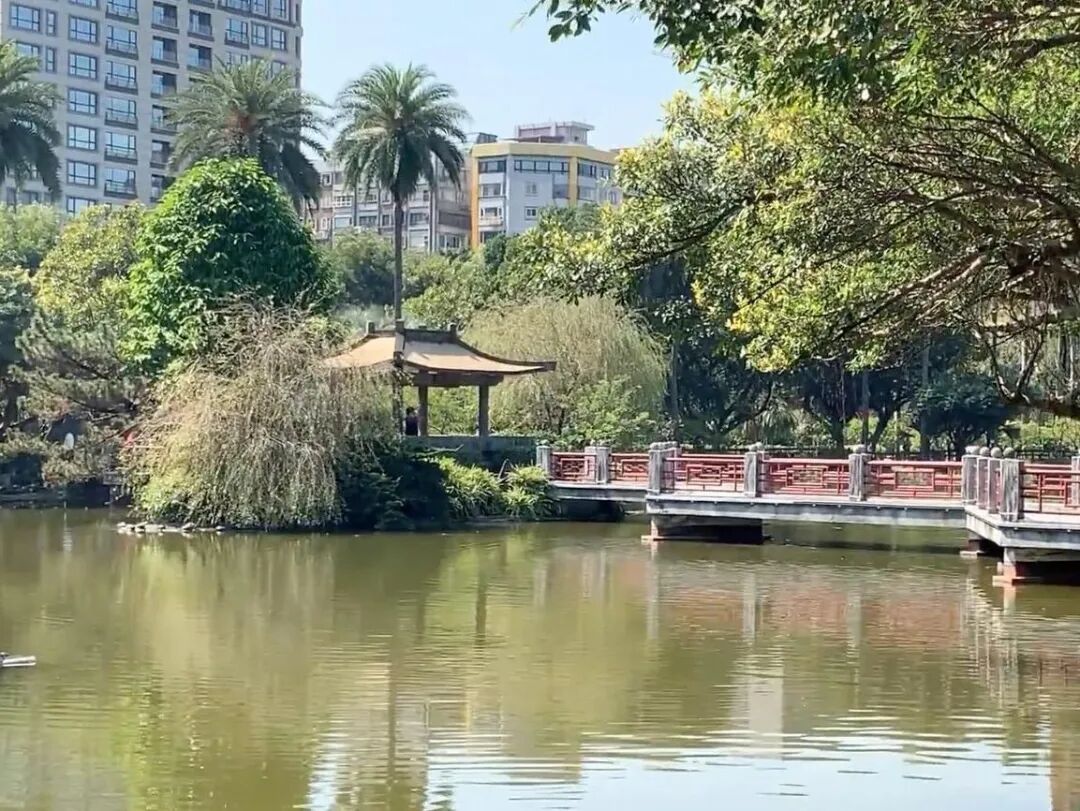
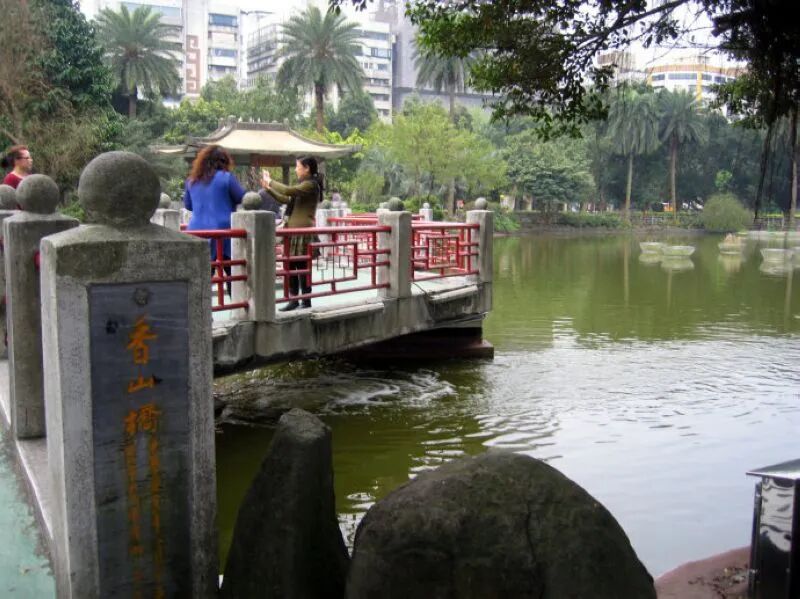
Connecting Cuiheng Pavilion to the north and south are two winding bridges. These were originally called Yamaroku Bridges but were later renamed Xiangshan Bridge to honor Dr. Sun Yat-sen’s birthplace. A thoughtful touch!
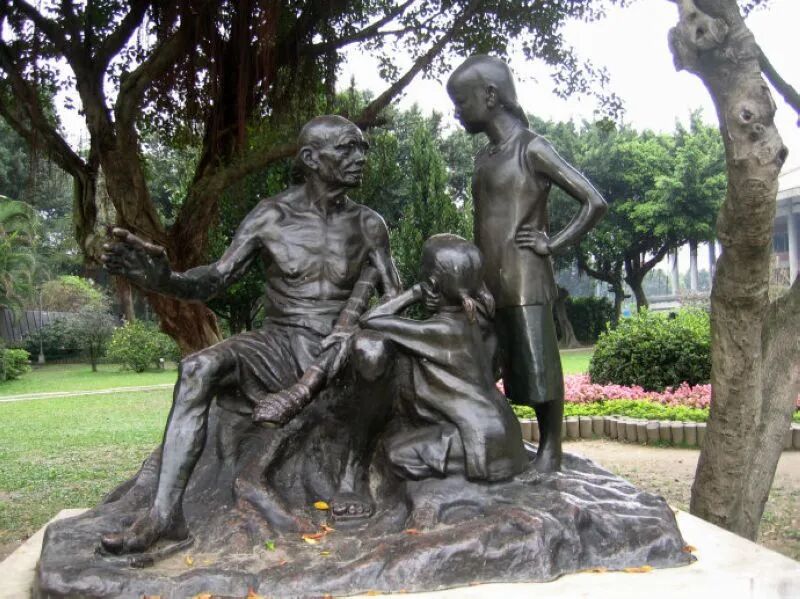
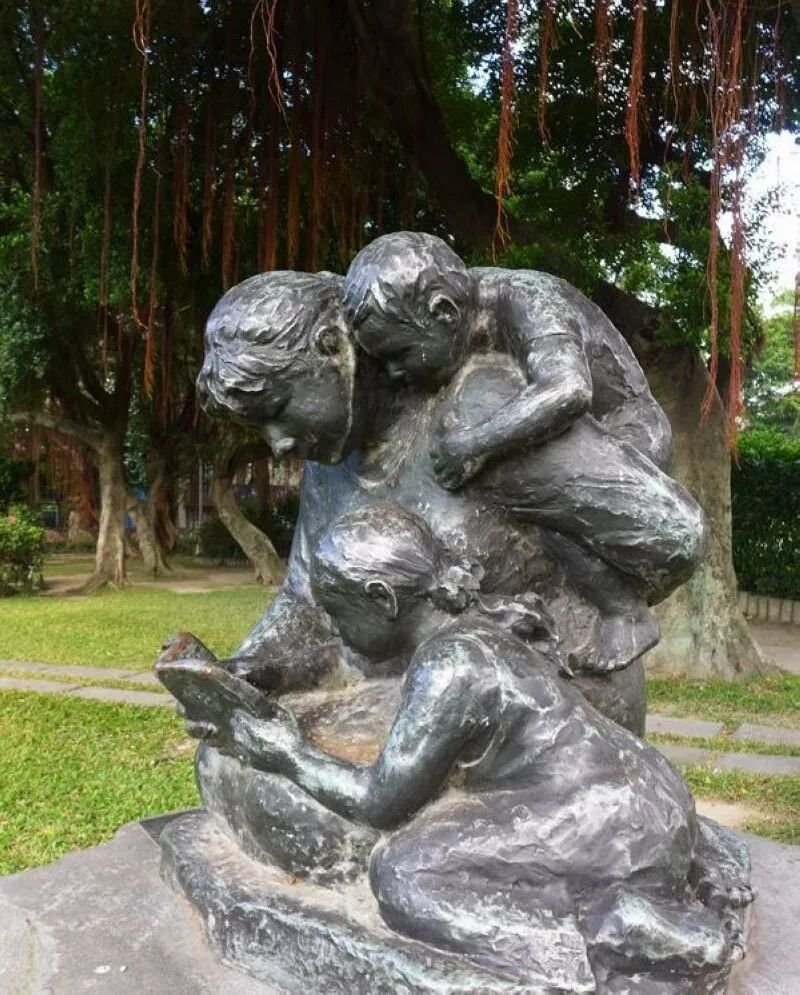
You’ll also stumble upon some meaningful sculptures in the park. One, titled “Roots” by the renowned sculptor Cao Chong’en, depicts young Dr. Sun Yat-sen in his village school, listening intently to an old Taiping Heavenly Kingdom veteran, Elder Feng, recount his anti-Qing stories. This experience is said to have sparked Dr. Sun’s revolutionary ideas, which later led him to overthrow the imperial system and establish the Republic of China. What an inspiring piece!
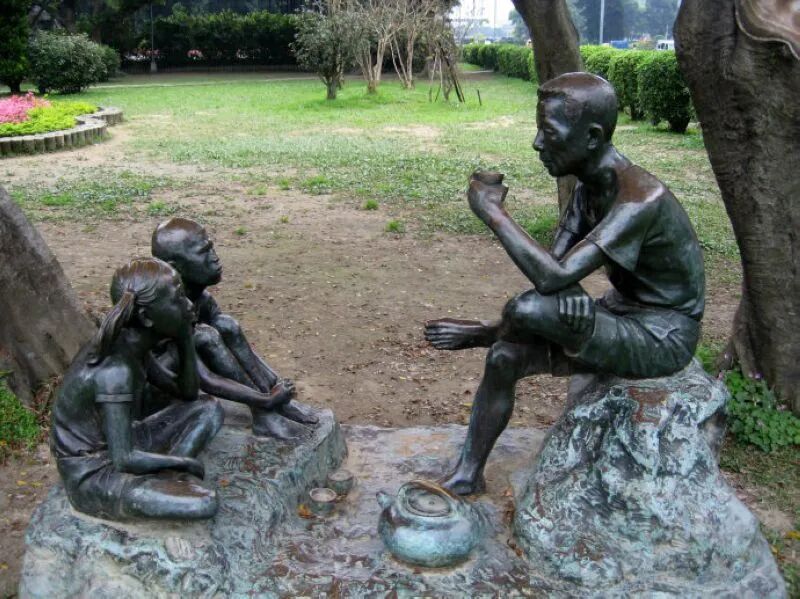
North of Cuihu Lake, there’s an exhibition area for native low-altitude plants of northern Taiwan, and a bronze statue of Yu Youren. Legend has it that when Yu Youren was gravely ill, he held up one finger, then three fingers to Yang Liang-kung. This was his wish: that when China reunifies, his remains be returned to his ancestral home in Sanyuan County, Shaanxi Province. So poignant!
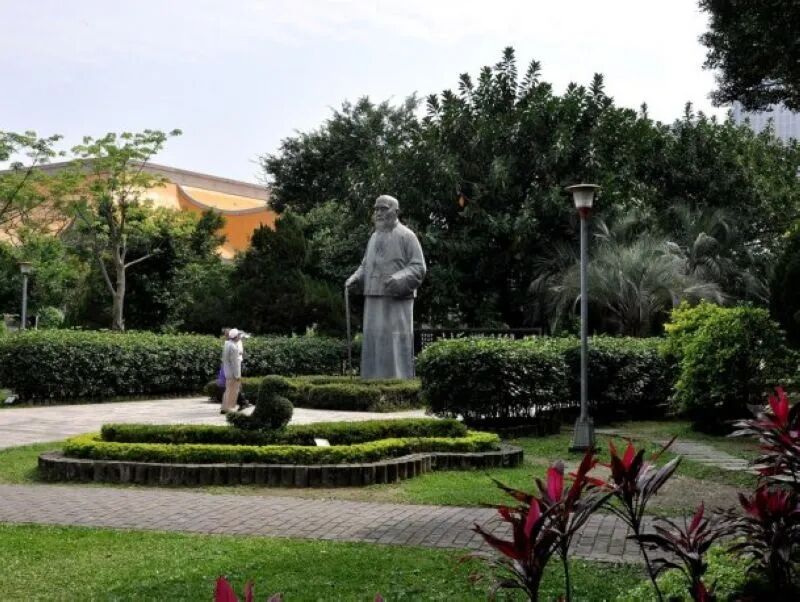
On January 24, 1962, Yu Youren penned a deeply moving and influential lament, “Looking Towards the Mainland”: “Bury me on the mountaintop, oh, to gaze upon my homeland; My homeland unseen, only tears flow! Bury me on the mountaintop, oh, to gaze upon my hometown; My hometown unseen, forever unforgettable! Sky vast, wild plains boundless; On the mountain, a nation’s sorrow.” Goosebumps, seriously.
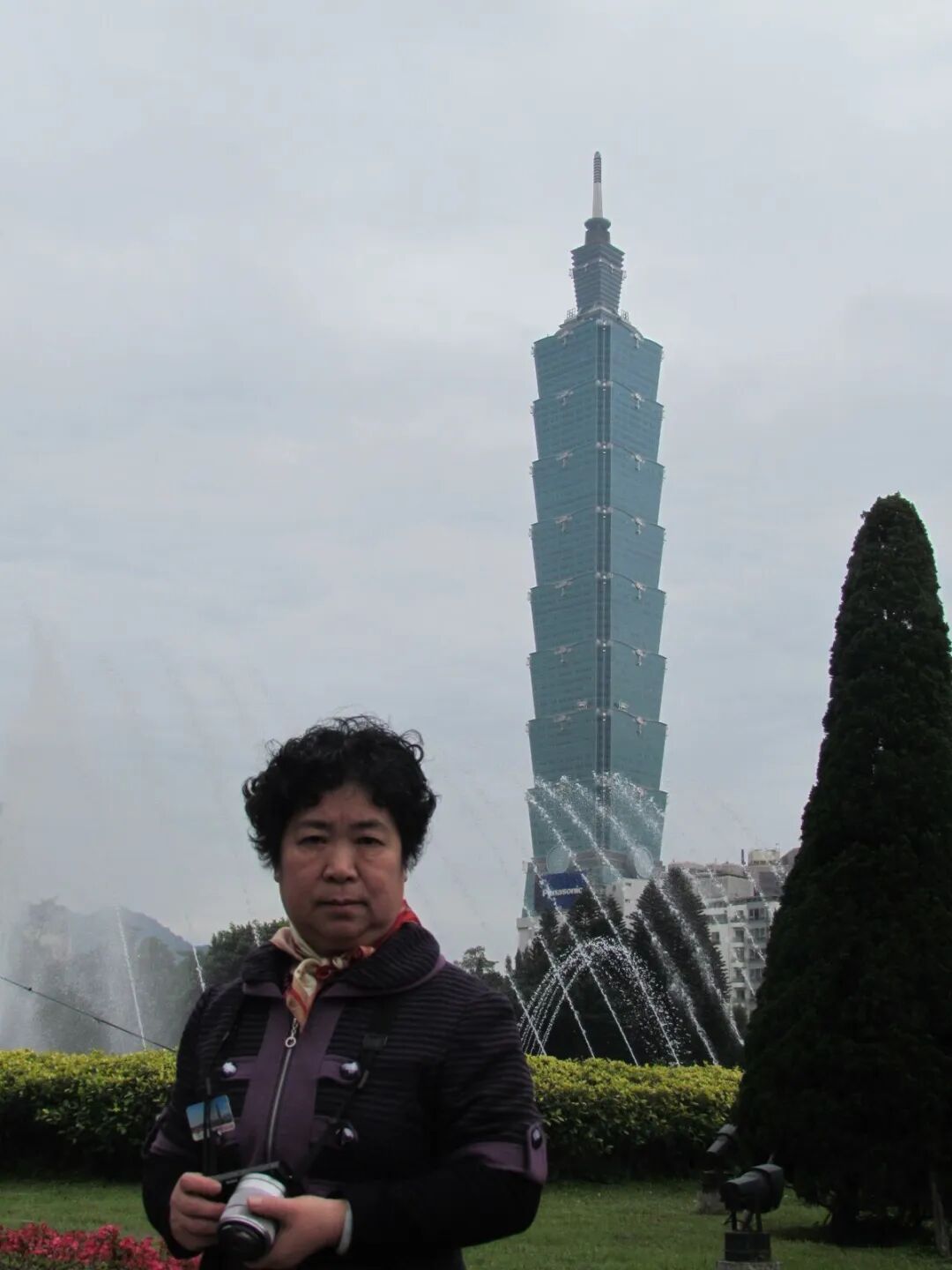
Oh, and here’s a pro tip: the Memorial Hall plaza offers some of THE best, unobstructed views of Taipei 101. Perfect for those iconic skyline shots!
Long live the legacy of Dr. Sun Yat-sen! What an inspiring and fascinating place to visit. Hope you enjoyed this deep dive!
More Stories
This Hidden 2nd-Floor Bar in Taipei Is Serving Up Seriously Next-Level Risotto
The 3 AM Secret: Finding Taipei’s Most Exclusive Late-Night Speakeasy Diner
Chasing Neon and Graffiti: A Low-Key Night in Taipei’s Ximending